


Tailored Fibre Placement (TFP) for UAV and drone manufacturing
High-performance carbon structures with ZSK embroidery technology
Lightweight. Strong. Intelligent. Automated.
With Tailored Fibre Placement (TFP) technology from ZSK STICKMASCHINEN, drone manufacturers produce next-generation carbon-fibre components – lighter, stronger and smarter than conventional composite materials.
Through precise, stitch-based fibre placement, ZSK embroidery machines enable the automated production of load-path-optimised structures for UAV and drone applications – from arms and frames to integrated sensor and heating systems.
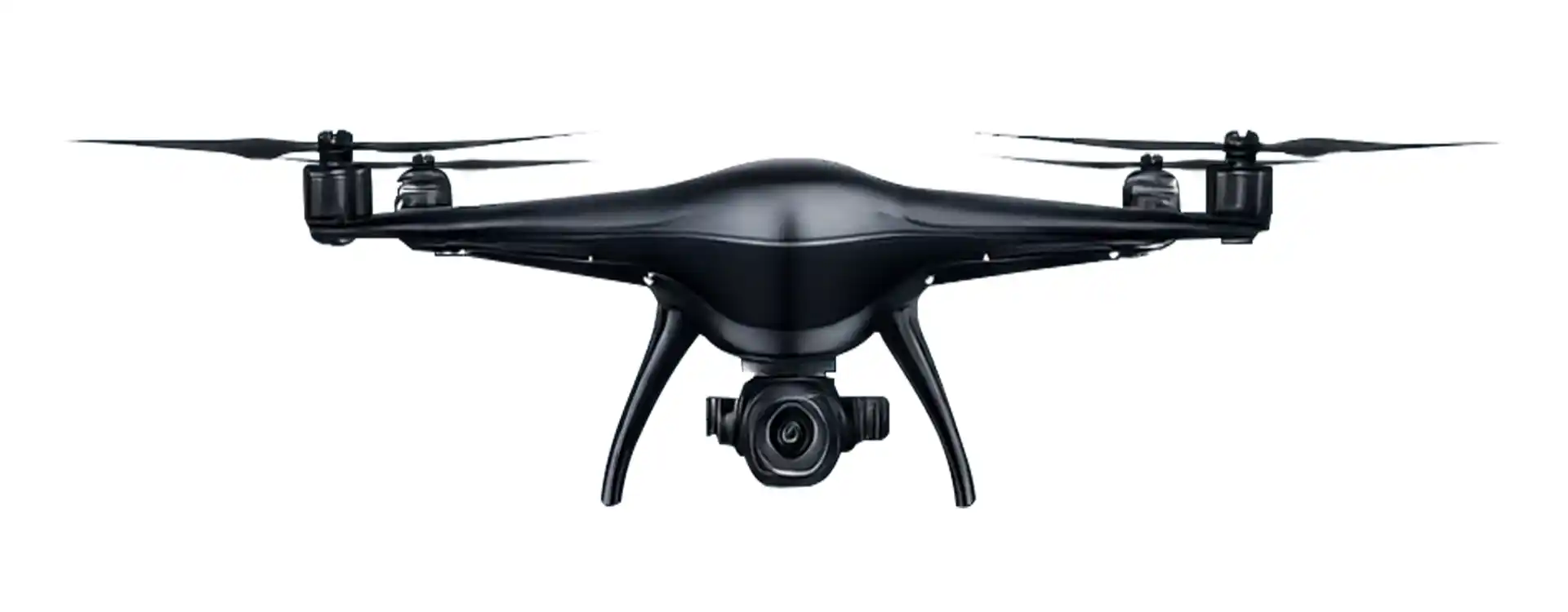
With Tailored Fibre Placement (TFP) technology from ZSK STICKMASCHINEN, drone manufacturers produce next-generation carbon-fibre components
Why TFP is ideal for drone structures
Modern drones must deliver maximum performance at minimal weight. TFP meets these requirements perfectly.
Key challenges in drone design
- Strict weight constraints
- High vibration and fatigue loads
- Complex stress distributions
- Limited installation space
- Growing demand for integrated electronics
How ZSK TFP addresses these challenges
- Fibres follow real load paths for variable-axial composites
- Material only where it is required
- Local reinforcement zones
- Integration of functional elements
- Fully automated, reproducible manufacturing
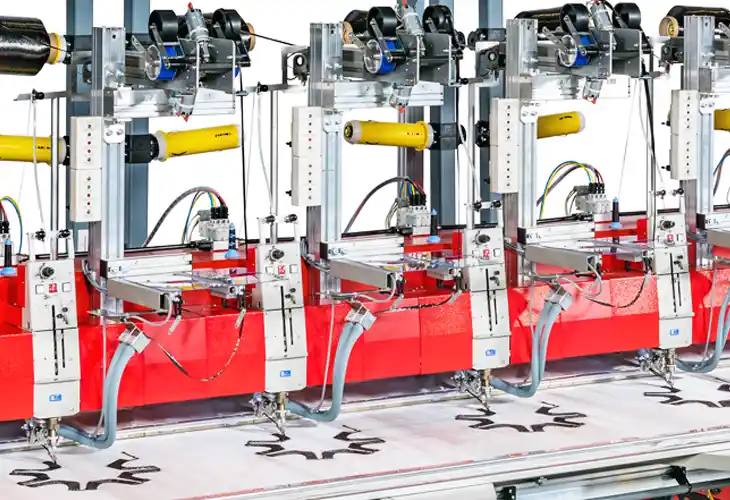
Result: Up to 25% weight reduction at the same or higher stiffness.
Typical drone components made with TFP
Drone arms and booms
- Optimised bending and torsional strength
- Reduced vibration transmission
- Higher payload capacity
- Longer flight times
Motor and propeller interfaces
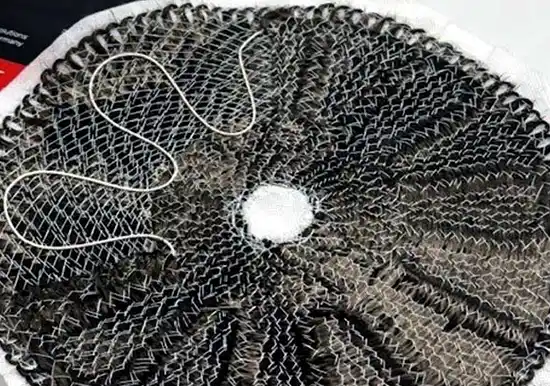
- Circular fibre layouts around fastener points
- Local fatigue reinforcement
- High fatigue strength at elevated rotational speeds
Central frame and chassis
- Structural cut-outs without loss of strength
- Optimised load transfer between arms
- Integrated cable routing
- Hybrid designs using carbon/glass/aramid
Structural housings
- Battery housings
- Payload carriers and camera mounts
- Sensor housings
Advantage: Fewer individual parts with higher mechanical efficiency.
Integrated functional conductor structures: heating, sensors and data lines
Intelligent drone components with integrated monitoring and environmental control.
A unique advantage of ZSK TFP technology is the direct integration of functional conductor elements into the composite structure during manufacturing.
Can be integrated:
- Heating wires (de-icing, temperature control)
- Sensor cables (strain, temperature, vibration)
- Data and signal lines
- Power conductors
Your benefits
- ✔ No separate wiring harnesses
- ✔ Reduced assembly effort
- ✔ Lower risk of failure
- ✔ Higher reliability
- ✔ “Smart structures” with embedded intelligence
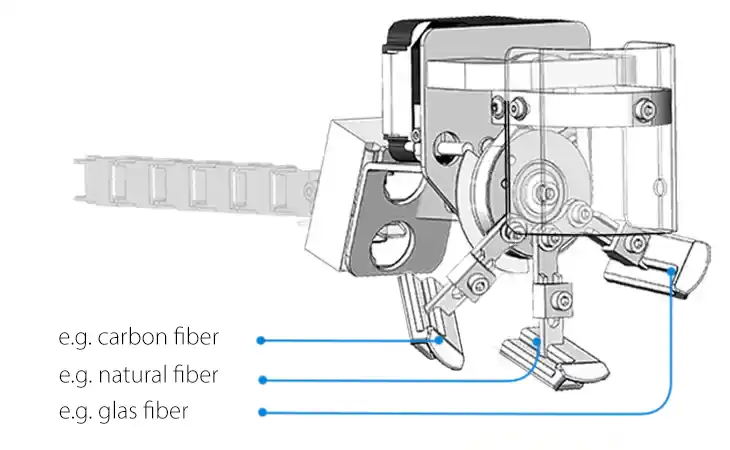
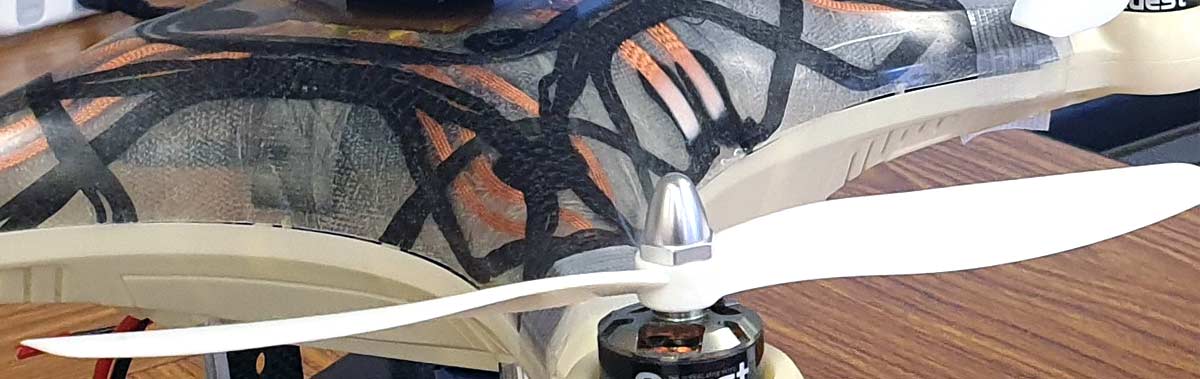
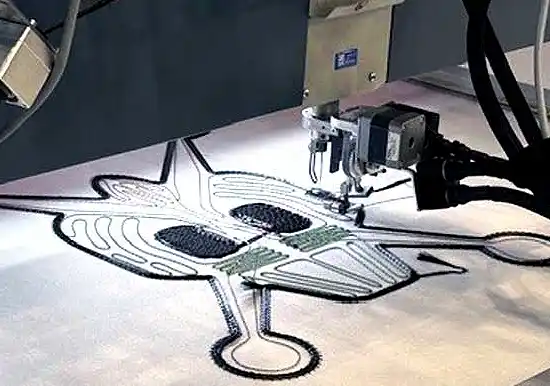
ZSK TFP technology integrates functional conductor elements into the composite structure during manufacturing
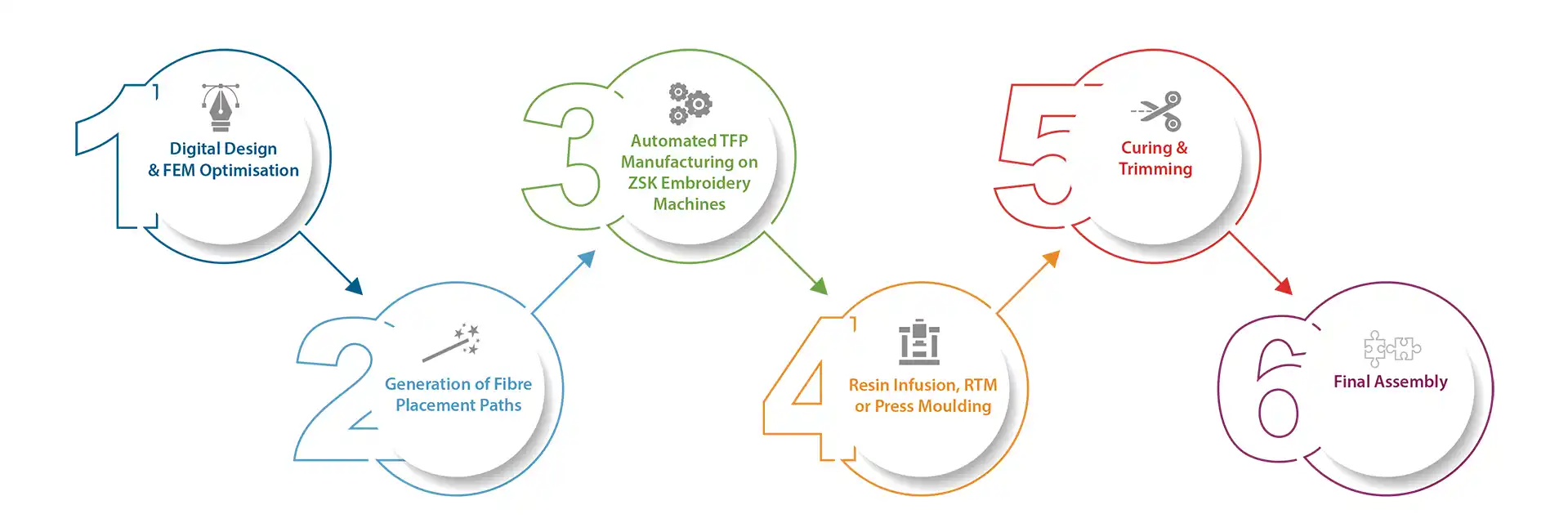
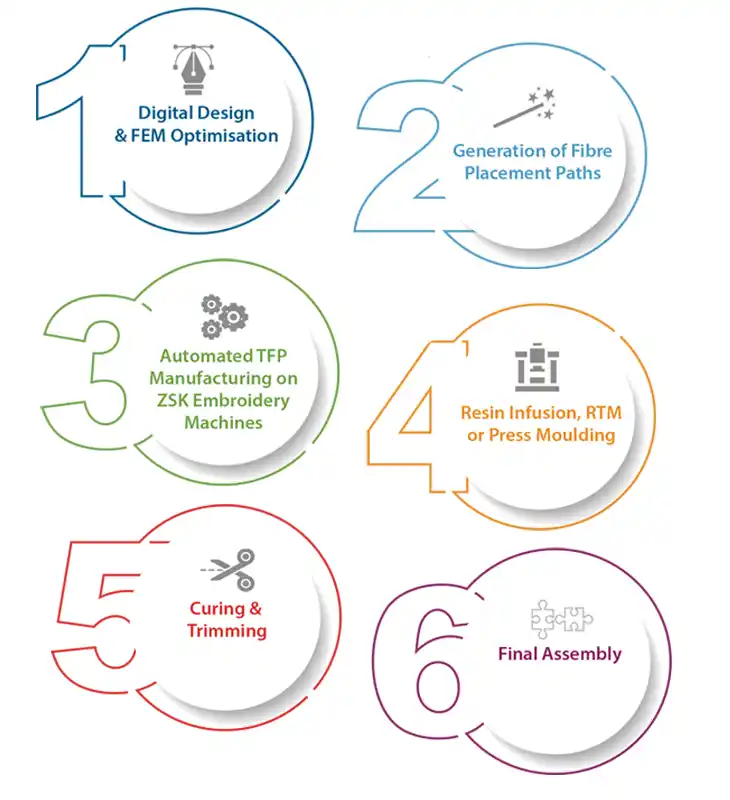
From fibre preform to finished composite component
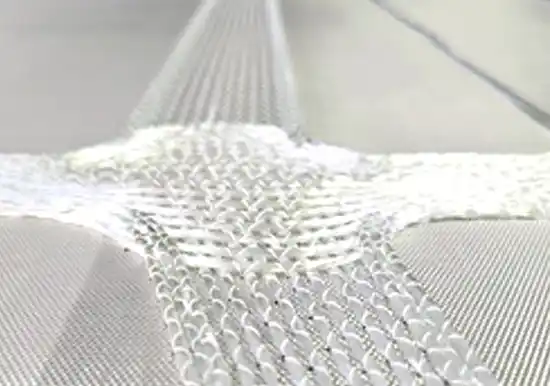
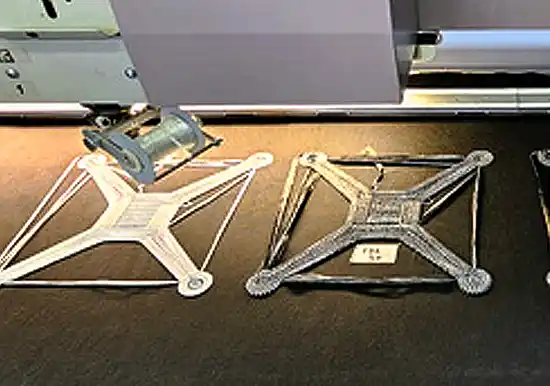
ZSK TFP systems produce high-precision dry-fibre preforms that are further processed using common resin methods.
Typical process chain
Complete solutions for series production
For customers requiring fully finished composite components, our partners such as Unwind3D provide product development, tooling, mould construction and composite consolidation solutions.
This creates a seamless industrial production workflow – from automated fibre placement to the ready-to-install drone component.

Technical embroidery systems for series production
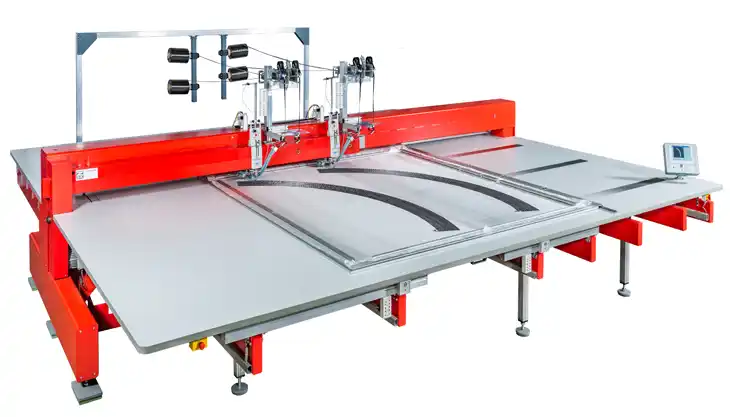
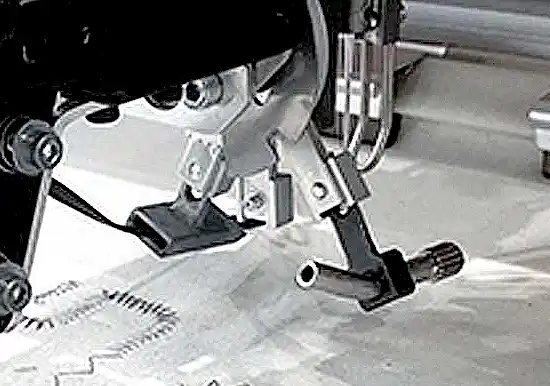
CMCW 0200ZSK technical embroidery system for Tailored Fibre Placement with a large embroidery field of 2,900 mm x 2,100 mm or two production areas of 2,100 mm x 2,100 mm each.
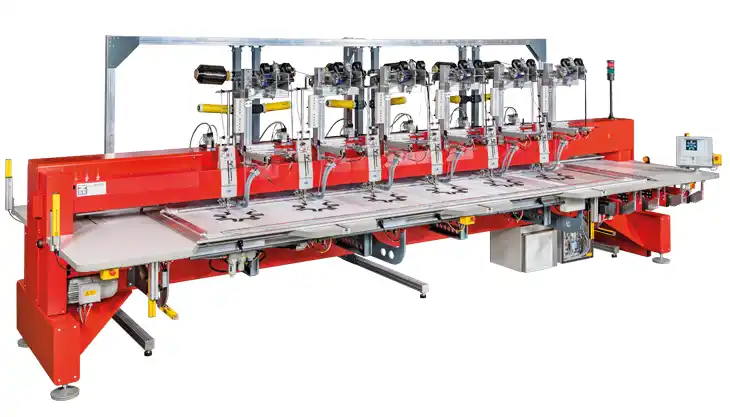
CMCW 0600ZSK technical embroidery system with six production areas of 600 mm x 600 mm each and optional active fibre feeding for automated TFP production.
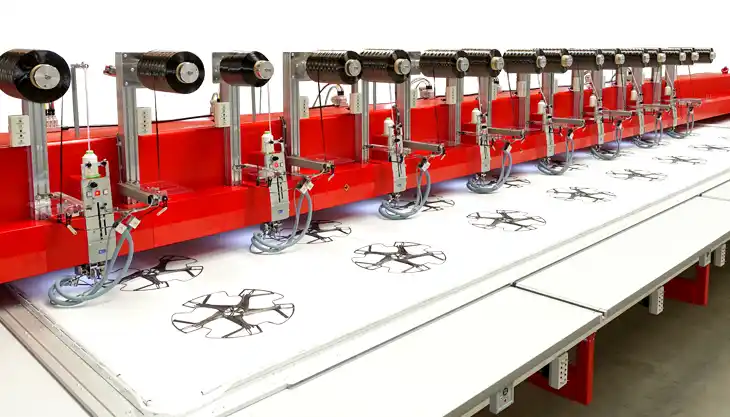
CZCW 0800ZSK technical embroidery system with eight production areas of 900 mm x 1,400 mm each or four production areas of 1,800 mm x 1,400 mm each.
Advantages of ZSK TFP technology for UAV production
1. Load-path-optimised structures
Fibres aligned along the main stress paths • Maximum stiffness-to-weight ratio • FEM-based engineering approach
2. Material and cost efficiency
Reduced carbon fibre consumption • Minimal waste • Lower material costs
3. Automation and scalability
High repeatability • Digital production workflow • Ideal for medium production volumes • Industrial-grade automation
4. Design freedom
Variable wall thicknesses • Local reinforcements • Complex geometries • Integrated functions
5. Proven German engineering
Industrial-grade machines • Long-term reliability • Global service network • Continuous innovation
Why TFP is particularly valuable for drone manufacturing
The following table compares conventional production methods and their limitations.
| Technology | Limitations |
|---|---|
| Prepreg laminates | Uniform thickness, material waste |
| CNC carbon plates | High material waste, limited optimisation |
| Pultrusion | No local reinforcement |
| AFP / ATL | High investment costs, limited flexibility |
Economic benefits: performance that pays off
TFP components increase operational efficiency
❕ Lower weight → longer flight time
❕ Higher stiffness → improved flight stability
❕ Reduced vibration → longer motor lifetime
❕ Integrated electronics → simplified assembly
The result
✅ Higher payload capacity
✅ Lower maintenance costs
✅ Longer service life
✅ Improved ROI
ZSK – your partner for modern drone manufacturing
ZSK STICKMASCHINEN is one of the world’s leading manufacturers of industrial embroidery and TFP systems.
With decades of experience in technical embroidery and composite reinforcement, ZSK supports drone manufacturers with:
A comprehensive process offering
- ✔ Machine technology
- ✔ Application engineering
- ✔ Process development
- ✔ Training and support
- ✔ Global service network
Extensive expertise in Tailored Fibre Placement (TFP)
- ✔ High structural efficiency
- ✔ Flexible design
- ✔ Low tooling costs
- ✔ Faster development cycles
- ✔ Competitive advantage
ZSK technical embroidery systems and the additive manufacturing process TFP – Tailored Fibre Placement are ideal for the production of:
- Industrial drones | Inspection UAVs | Long-range platforms | Military UAVs | VTOL systems | High-performance racing drones
From prototype development to series production – ZSK enables your path to high-performance UAV structures.
Tailored Fibre Placement (TFP) – Technology Overview
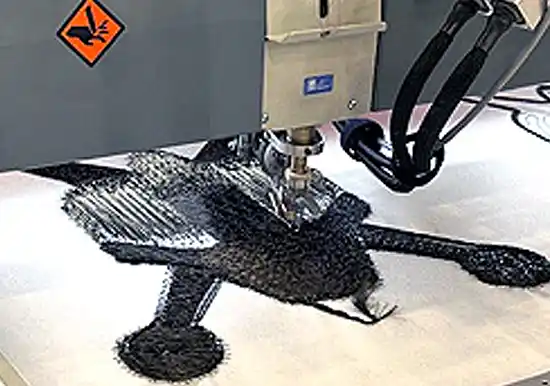
Tailored Fibre Placement (TFP) is an advanced composite manufacturing technology in which carbon fibres are placed precisely along load paths using industrial embroidery machines.
This stitch-based process enables the production of lightweight, high-performance composite structures with variable-angle fibre orientation.
Compared with conventional laminate manufacturing, TFP allows higher structural efficiency, reduced material consumption and greater design flexibility.
The technology is widely used in aerospace, UAV manufacturing and advanced lightweight engineering.