
EP-30 PCB Placement Device
Place. Fix. Connect. Automatically.
Integrate electronics directly into the embroidery process.
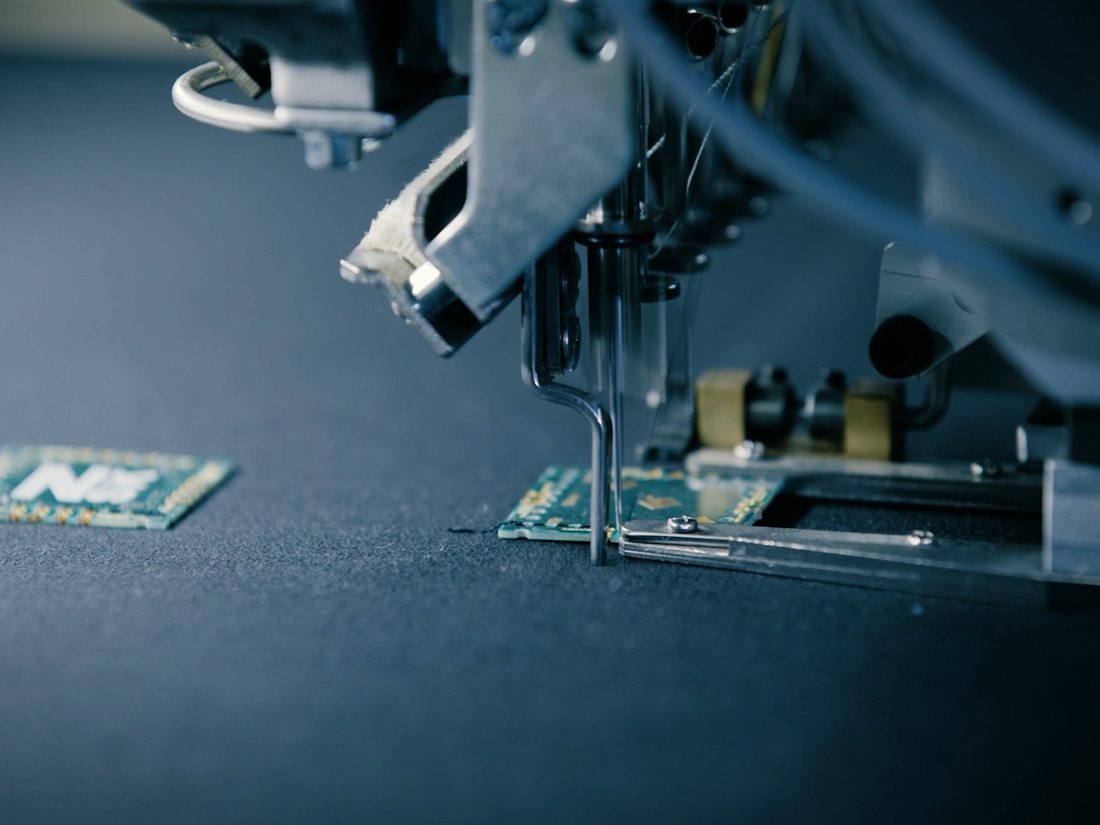
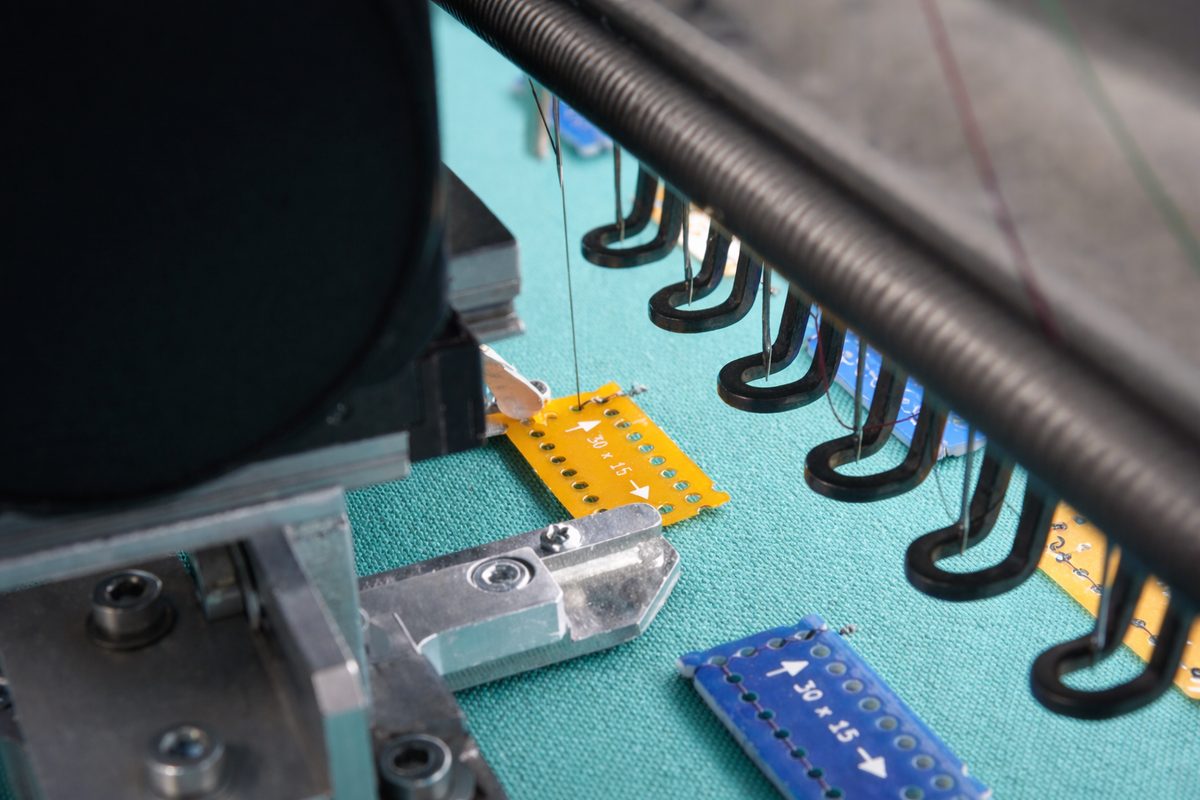
The ZSK EP-30 automatically places, mechanically fixes and electrically connects rigid and flexible PCBs directly on textile substrates.
Instead of adding electronic components manually after the textile process, PCB integration becomes part of the embroidery workflow itself — repeatable, programmable and scalable across the complete embroidery field.
From experimental Smart Textile prototypes to pilot production, small series and mass production, the EP-30 creates a direct path from idea to a repeatable process.
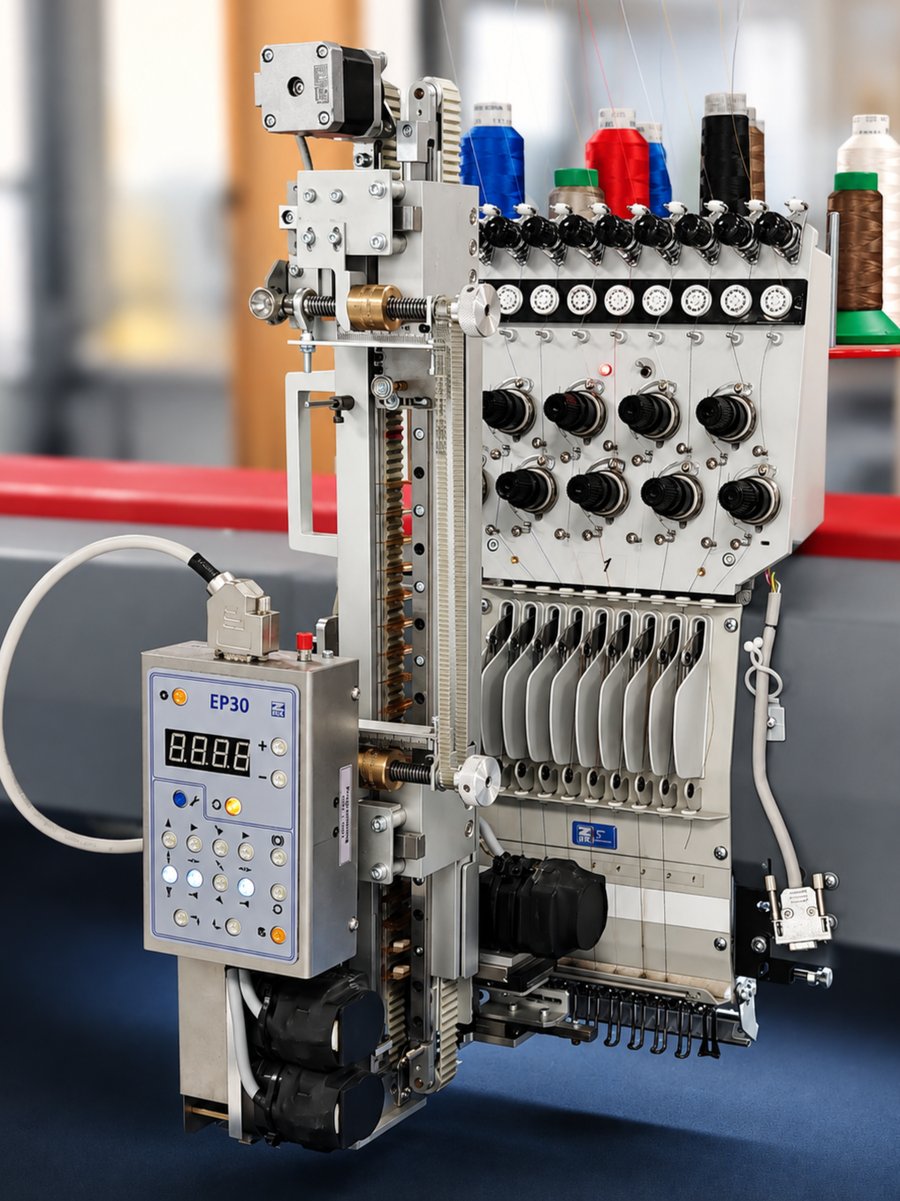
See the EP-30 in Action
Watch how the EP-30 automatically feeds, positions, fixes and connects electronic components directly within the embroidery process.
Electronics Integration Is Often Still a Manual Step
Developing an electronic textile is one challenge. Creating the same textile again — with the electronic components in the same position and connected in the same way — is another.
Manual PCB placement can work well for individual prototypes. But as the number of samples increases, it creates additional handling, depends on operator accuracy and becomes increasingly difficult to transfer into a repeatable production process.
The EP-30 was developed to automate exactly this step.
| Aspect | Manual placement | EP-30 process |
|---|---|---|
| Component supply | Each PCB handled individually | Automatic feed from an exchangeable cassette |
| Positioning | Aligned by hand, accuracy depends on the operator | Encoder-controlled, digitally defined position |
| Fixation & contacting | Separate assembly step after embroidery | Inside the embroidery run, with conductive thread |
| Changeover | Mechanical readjustment for every PCB format | Digital setup in 0.1 mm increments, settings can be saved |
| Scaling up | Effort grows with every additional sample | Same process from prototype to mass production |
One Integrated Process Instead of Separate Assembly Steps
With the EP-30, PCB placement becomes part of the embroidery sequence.
PCBs are supplied from an exchangeable cassette, automatically picked up and positioned on the textile. The embroidery machine then mechanically fixes the PCB and creates its electrical connections using conductive thread.
Less manual component handling
Automated feeding and placement replace repeated hand-positioning of individual PCB carriers.
Repeatable positioning
Encoder-controlled positioning provides a digitally controlled process instead of relying on manual alignment.
Integrated electrical connection
Placement, mechanical fixation and electrical contacting take place within the embroidery workflow.
A process designed to scale
The same fundamental manufacturing approach carries from individual prototypes through validation and pilot projects to small series and mass production.
Digital Setup Instead of Mechanical Trial and Error
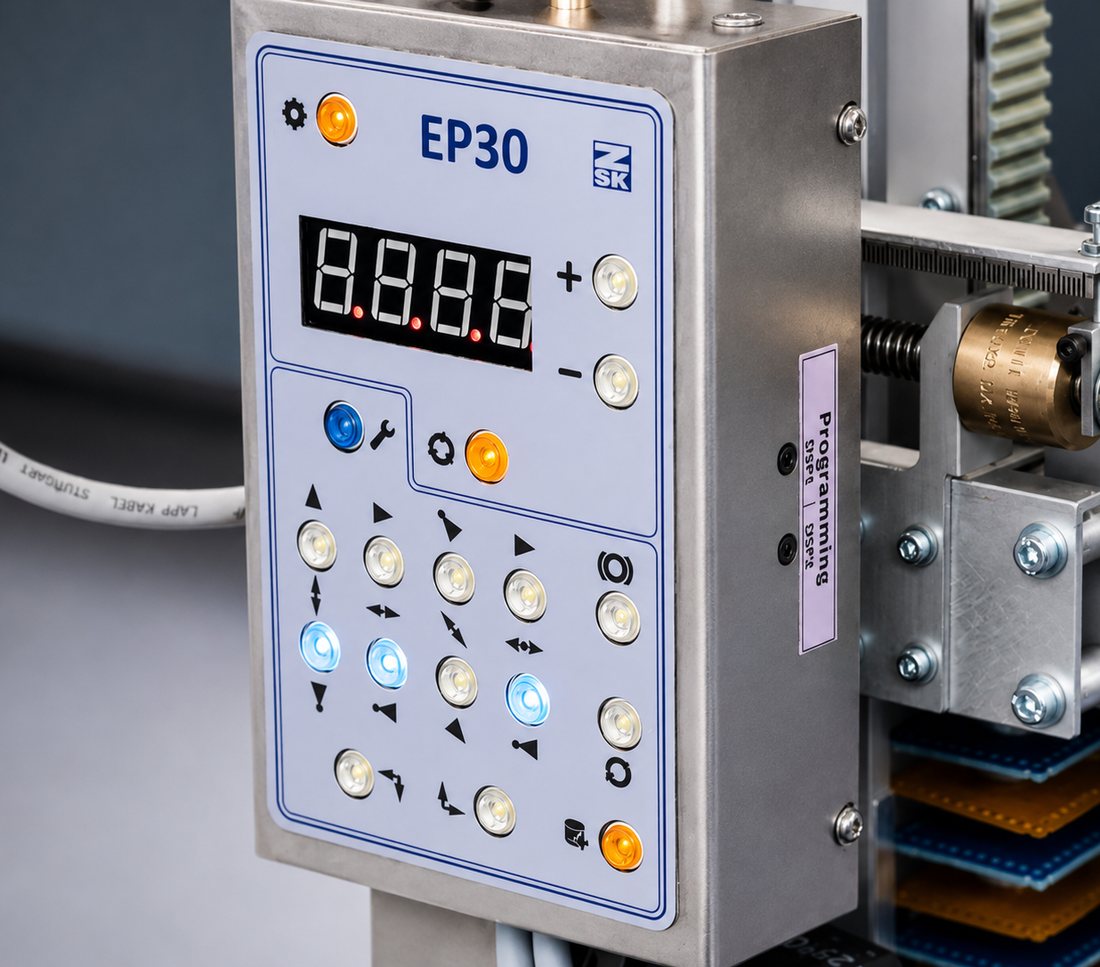
The most important step forward compared with the previous generation: almost every motion of the device is now set digitally — in 0.1 mm increments — and every setting can be saved.
Instead of loosening screws and re-adjusting mechanical stops for each new PCB format, the operator enters the values on the EP-30 control panel. Magazine height, pusher travel and the up/down and back/forth positions of the PCB shuttle are all defined numerically, confirmed on the display and stored in the device.
Once a PCB format runs reliably, its settings are recalled instead of being re-established manually for every changeover — the same value produces the same result on every machine and every shift.
From Research Prototype to Repeatable Process
Manufacture the same sample again — and again
Research often requires more than producing one functioning demonstrator. New materials, geometries, sensor configurations and electronic architectures need to be manufactured repeatedly so that designs can be tested, compared and validated.
The EP-30 provides a programmable method for integrating PCBs into these samples, reducing the dependency on manual PCB positioning from one experiment to the next.
Particularly relevant for research into:
Close the gap between prototype and production
A prototype assembled by hand can prove that an idea works. It does not automatically prove that the product can be manufactured repeatedly.
By integrating PCB placement into an industrial embroidery process, the EP-30 helps bridge this gap. Automated component supply and controlled positioning reduce the dependence on manual PCB integration as projects move toward larger sample quantities, pilot production, small series and mass production.
This creates a more direct path between product development and a scalable textile manufacturing process.
One Device. Many Possibilities.
The same programmable process supports very different products — from heated workwear to sensor-integrated sportswear and experimental research platforms.
Heated Textiles
Automatically integrate the electronics required for intelligent heating systems into workwear, protective clothing or other textile structures.
Sensor-Integrated Sportswear
Position sensor electronics directly where measurements are required while integrating connections through the textile.
Medical & Health Wearables
Explore repeatable methods for integrating monitoring and sensing electronics into wearable textile structures.
Research & Experimental Smart Textiles
Develop new architectures combining textile sensors, conductive structures and rigid or flexible electronics on one programmable manufacturing platform.
How the EP-30 Works
Five steps, executed inside the embroidery run.
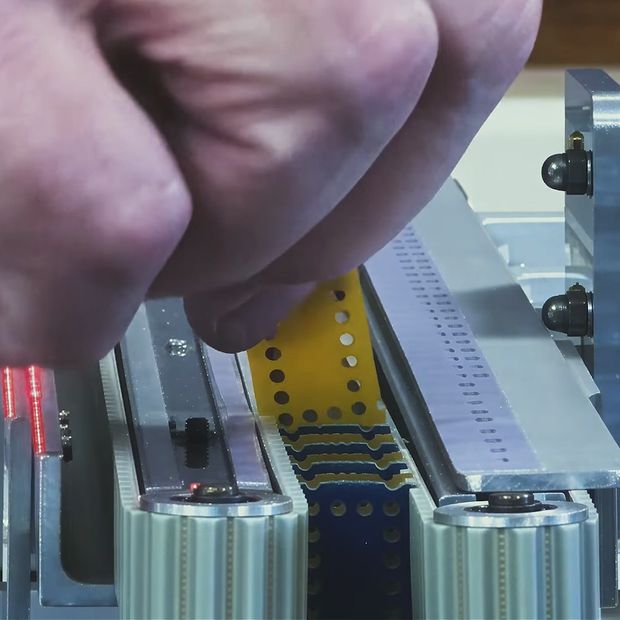
Load
Rigid or flexible PCB carriers are loaded into an exchangeable magazine.
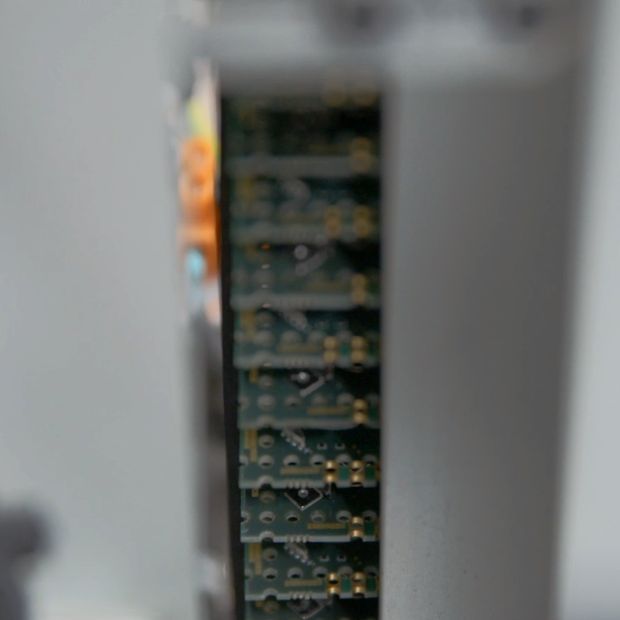
Feed
The PCB carriers are automatically supplied to the placement mechanism.
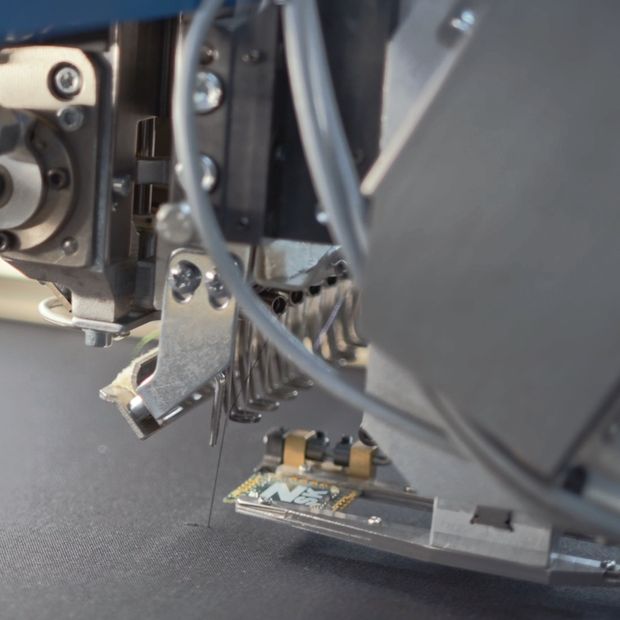
Position
The EP-30 picks up and positions the PCB at its programmed location within the embroidery field.
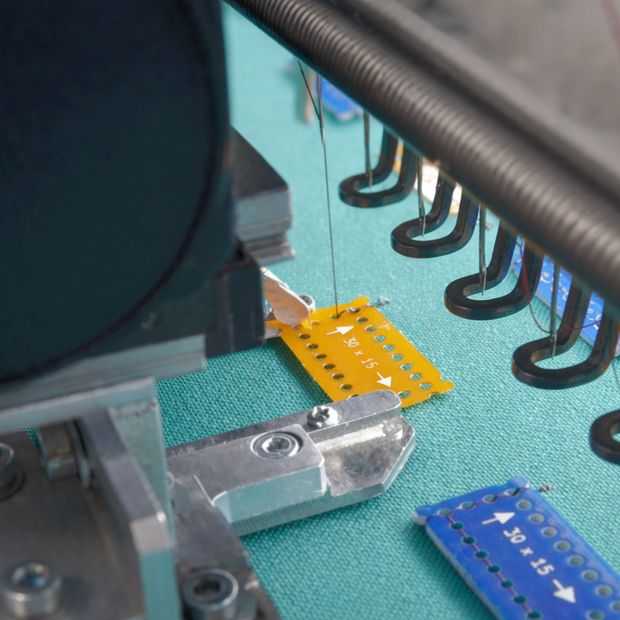
Fix
The embroidery process mechanically secures the PCB to the textile.
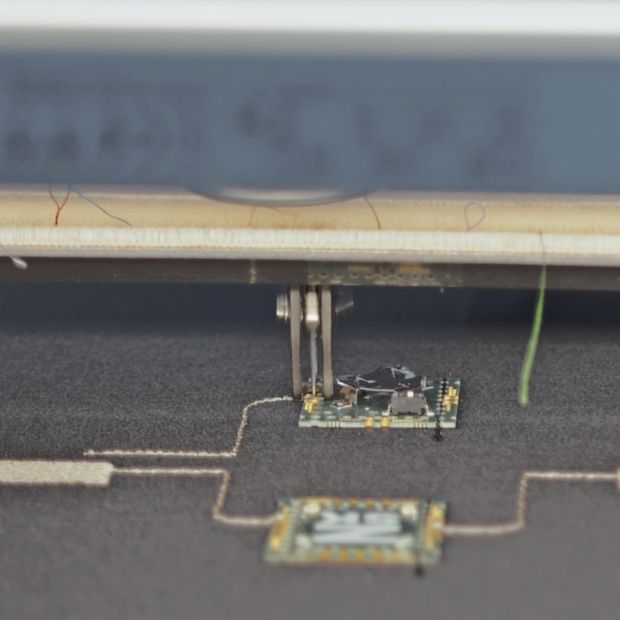
Connect
Conductive threads create the electrical connection between the PCB and the textile circuit.
Designed for Rigid and Flexible PCBs
The EP-30 supports PCB carriers within the following range:
| PCB carrier footprint | 12 × 12 mm up to 36 × 48 mm |
|---|---|
| Rigid PCB carrier thickness | 0.8–1.6 mm |
| Maximum total height incl. components | Up to 9 mm |
| Placement area | Complete embroidery field |
| Component supply | Exchangeable cassette / automatic feed |
| Setup | Digital, in 0.1 mm increments — settings can be saved |
| Machine integration | Mounted directly on the ZSK F-head |
Subject to technical change. Final specification depends on machine configuration.
Already Working with a ZSK Machine?
The EP-30 is an add-on device for compatible ZSK F-head embroidery machines.
Compatibility depends on the machine configuration and control-electronics generation. If you already operate a ZSK machine, we can check whether your existing system is suitable for the EP-30 or which options are available.
Send us a message
Tell us which machine you operate — we check it and come back to you with the result.
Have an Electronics-in-Textile Project?
Every application is different.
Whether you are developing a new research platform, integrating sensors into a wearable or looking for a way to move a manually assembled prototype toward a repeatable manufacturing process — we would be glad to discuss your application with you.

Applications around the EP-30 are handled by 3E Smart Solutions — the in-house engineering office of ZSK Stickmaschinen for E-Textiles and Smart Textiles.
3E are experts in smart textiles applications. The team supports product development, builds and tests prototypes, and runs training and workshops for teams that want to work with the technology themselves.
Tell us briefly what you are developing, which PCBs or electronic components you would like to integrate and whether you are working with an existing ZSK machine.
 Afrikaans
  Albanian
  Armenian
  Bosnian
  Bulgarian
 .svg) Chinese (Traditional)
Chinese (Traditional) .svg) Chinese (Simplified)
Chinese (Simplified)  Croatian
  Czech
Czech  Danish
  Dutch
Dutch  Estonian
  Filipino
  Finnish
  French
  Georgian
  Greek
Greek  Hindi
Hindi  Hungarian
  Indonesian
  Icelandic
  Italian
  Japanese
  Korean
  Latvian
  Lithuanian
  Malay
Malay  Maltese
  Macedonian
  Norwegian
  Polish
  Portuguese
  Romanian
  Russian
  Swedish
  Serbian
  Slovak
  Slovenian
  Spanish
  Tamil
Tamil  Thai
Thai  Turkish
  Ukrainian
  Vietnamese