


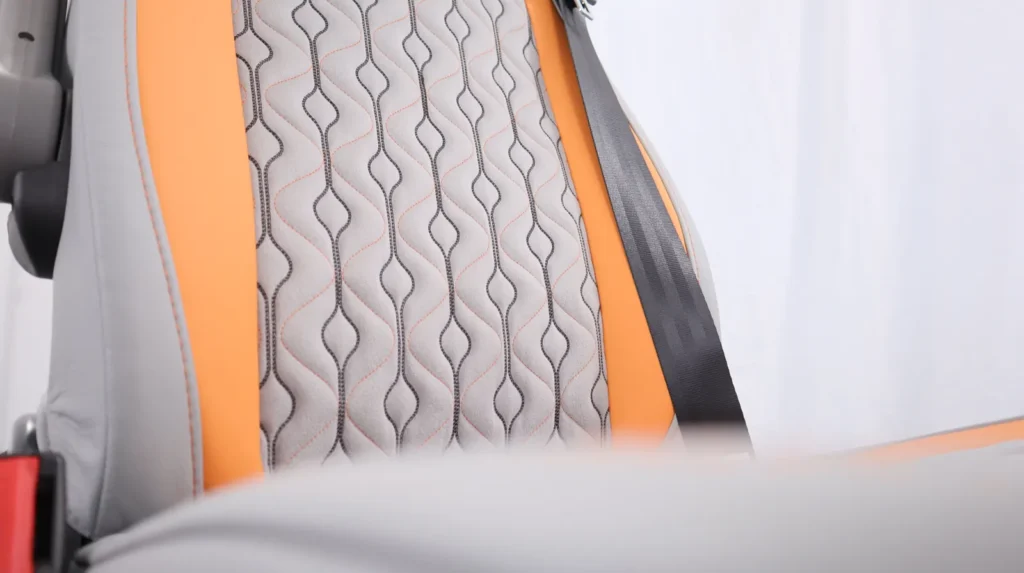
Decorative stitching and embroidery for car seats, headrests and door panels
Topstitching, quilting with 3D effect and embroidered logos – sewn and embroidered on one ZSK machine, in one set-up. On leather, artificial leather, Alcantara and fabric, also laminated on foam or spacer fabric.
What is decorative stitching in car interiors?
Decorative stitching (Ziernaht) is a visible seam made for design, not for joining parts: topstitching, diamond or honeycomb quilting and ornamental stitch patterns. ZSK machines sew these seams with sewing thread and embroider logos or lettering in the same set-up – one machine instead of separate sewing and embroidery equipment.
Which interior parts can you finish?
These are the parts ZSK customers sew and embroider – each with its own frame and design.
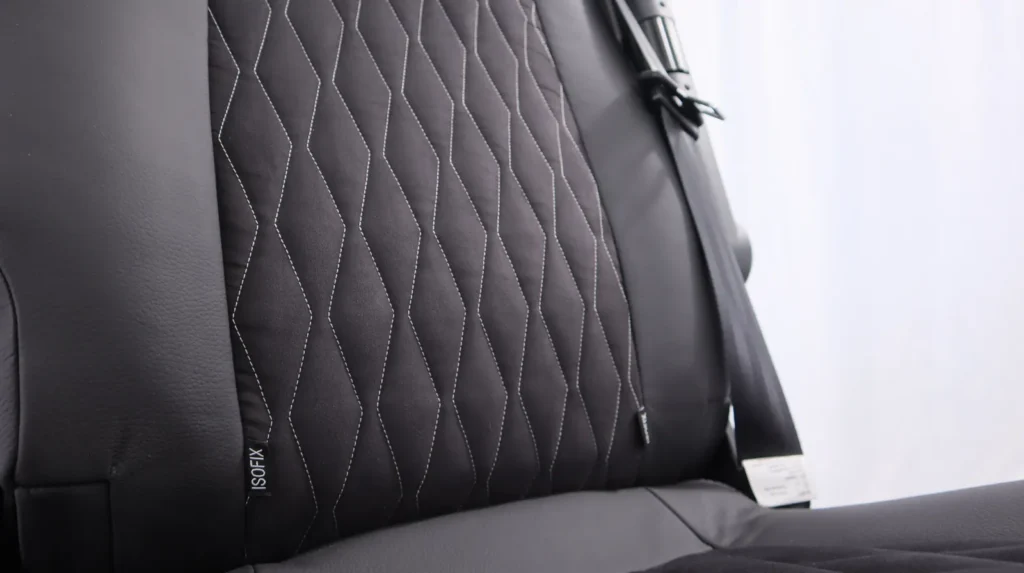
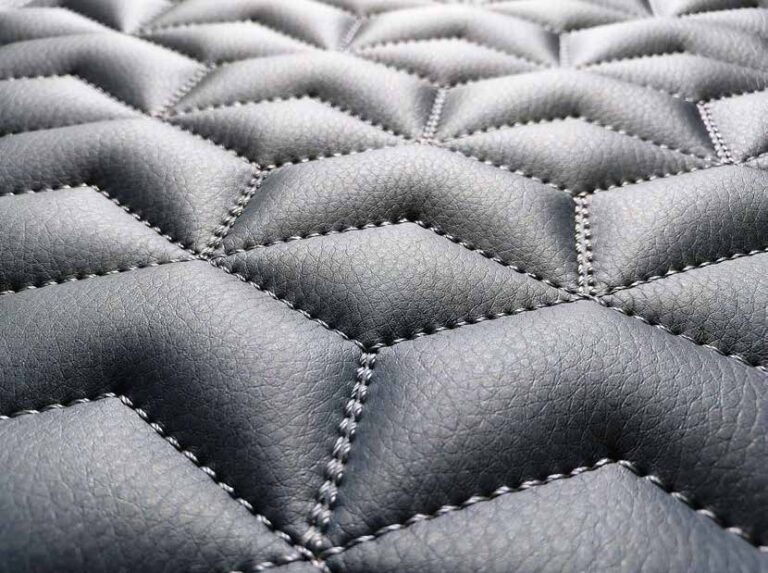
Diamond, honeycomb and free-form quilting on foam-laminated covers – with pronounced 3D relief.
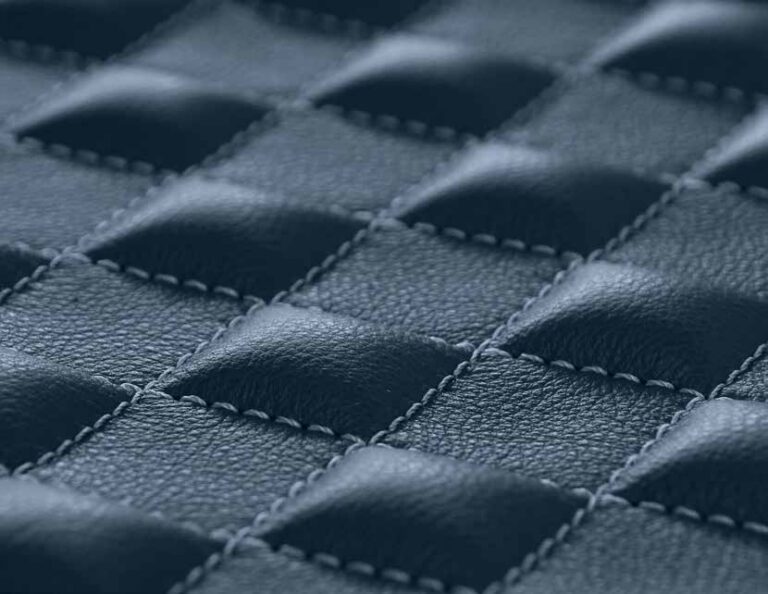
Even stitch length and straight lines, from fine to thick sewing thread.
Embroidered model names, logos and patterns positioned on the headrest cover.
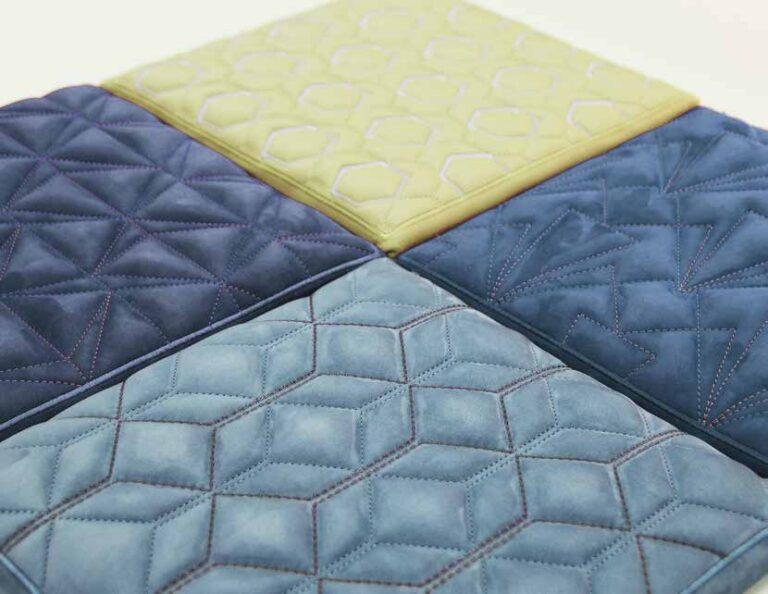
Leather on foam or spacer fabric up to 20 mm thick.
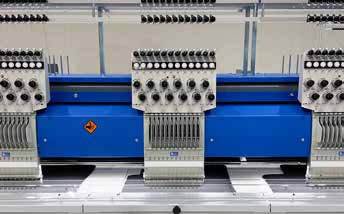
Pneumatic floor mat tensioning for effortless clamping.
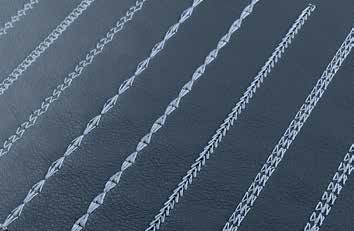
Pre-installed or your own decorative stitch patterns from EPCwin.
Why sew and embroider on one machine?
Because every hand-over between machines costs time and position accuracy. On a ZSK machine, the decorative seam, the quilting and the embroidered logo are produced in one clamping – the cut part never leaves the frame.
- Sewing thread and embroidery thread on the same head – 15 to 210 tex
- Up to 24 needles per head: colours and thread sizes without re-threading
- Optional extra row of thread tensions for size 20 and thicker threads – for 3D effects in leather
- Camera alignment to perforation or embossing where needed
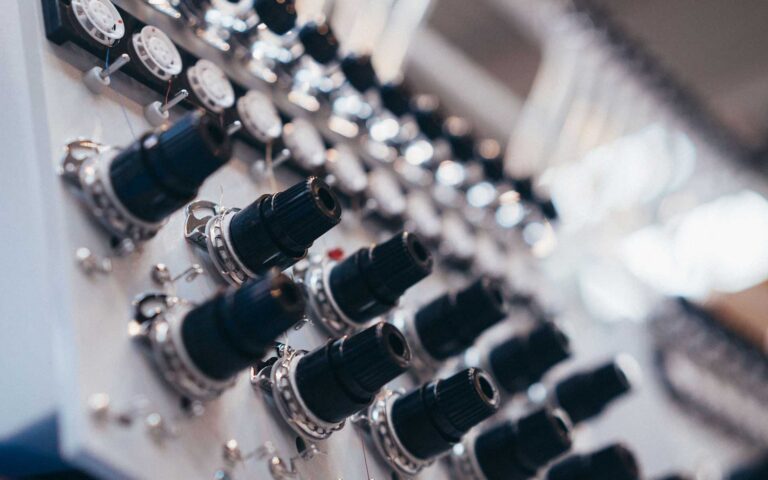
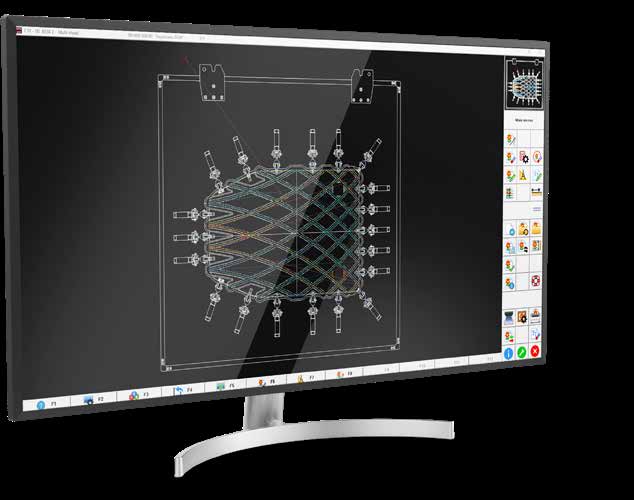
Your stitch pattern, accurate to 0.1 mm.
EPCwin is the CAD/CAM software behind every automotive design: integrated CAD drawing mode, countless pre-installed decorative stitches, your own stitch patterns, stitch limitation, angle settings and stitch filters – and export for the Vision System including edge detection.
The general catalog also lists an Automotive Edition of EPCwin. More about EPCwin →
Options that keep the line running.
Thick sewing threads empty bobbins fast and leather cut parts are valuable. These options from the ZSK automotive programme address both.
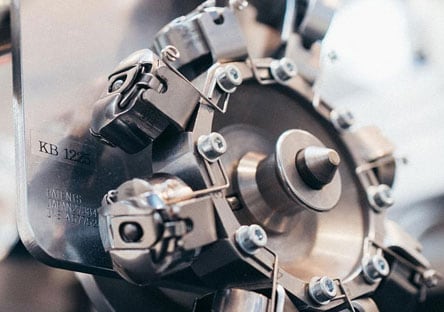
Jumbo hook: up to 50 % more bobbin thread, depending on thread size. Automatic bobbin changer with 8-bobbin magazine; AutoSelect assigns bobbins to needles. Bobbin changer →
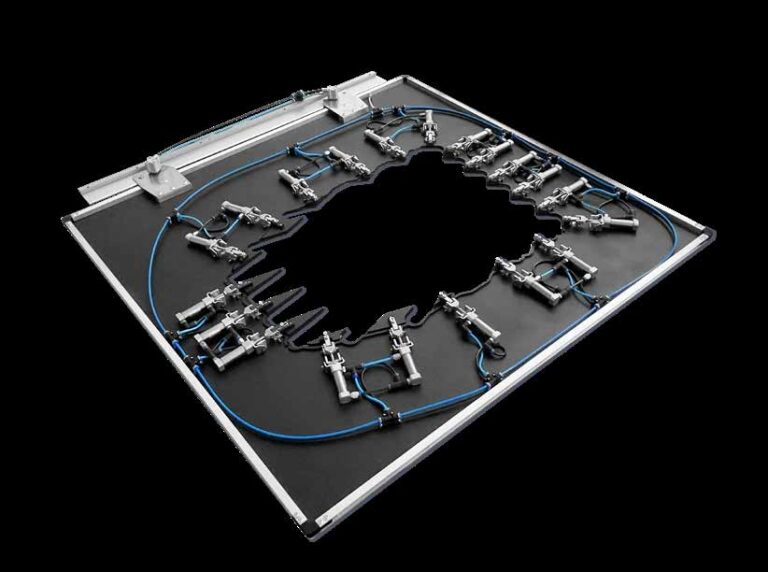
Quick frame change by foot pedal or switch; frame control checks position and closed clamps. Special frames →
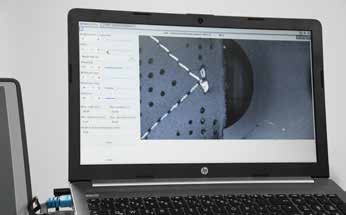
Designs and frames are loaded by scanning – fewer operator errors.
Automatic stop, finger protection at the take-up lever and a status light showing running, fault or ready. Safety devices →
Stitches can be placed closer to the frame and the field is used more efficiently – a major advantage with customised automotive frames.
Often chosen for automotive applications and for operator safety; doors in the table give access to the head. Table plate designs →
How upper and bobbin thread tension interact – and why it matters with thick threads. Thread tension guide →
More on Automotive & Interior
Send us your pattern – we sew the sample.
Cut part, DXF and thread – that is all we need to produce samples and analyse the cycle time on our machines in Krefeld.
Questions about decorative stitching and embroidery
Practical answers for seat and trim manufacturers. Missing your question? Our application engineers answer personally.
What is decorative stitching in automotive interiors?
Decorative stitching is a visible seam that serves design rather than joining parts: single or double topstitching, quilting patterns such as diamonds or honeycombs, and ornamental stitch patterns on seats, headrests, door panels and roof liners. On ZSK machines these seams are sewn with sewing thread, while logos and lettering are embroidered on the same machine in the same set-up.
Can one ZSK machine both sew and embroider?
Yes. For decades, sewing and embroidery required separate equipment; ZSK integrates both processes into one machine. It processes sewing and embroidery threads from 15 to 210 tex, with 6, 9, 12, 18 or 24 needles per head, so decorative seams in thick sewing thread and fine embroidered logos can be combined in one design.
Which materials can be processed?
ZSK solutions handle fabrics, artificial leather, Alcantara and leather, also when laminated on foam or spacer fabric. Material thicknesses of up to 20 mm are possible, which creates impressive 3D effects in quilting patterns. Special frames for single or multi-layer materials such as leather, foam and fleece hold the cut part securely.
How do thick threads create a 3D effect on leather?
Leather machines can be equipped with an additional row of thread tensions between the thread stand and the tension units. It is used for extra-thick threads of size 20 and thicker to create 3D effects in leather and upholstery material and is not part of the standard machine design. For thick threads, the silk stitch is kept on and the pantograph starts as late as possible.
Where do the decorative stitch patterns come from?
EPCwin contains countless pre-installed decorative stitches, and you can create your own stitch patterns for unlimited design freedom. EPCwin calculates stitches with an accuracy of 0.1 mm, includes a fully integrated CAD drawing mode and exports designs for the Vision System, including edge detection. The catalog also lists an Automotive Edition of EPCwin.
How do I reduce bobbin changes with thick sewing threads?
Three options help: the jumbo hook holds up to 50 % more bobbin thread, depending on thread size. The automatic bobbin changer swaps bobbins from a magazine with 8 bobbins, triggered via the T8 control panel. The AutoSelect bobbin changer adds a needle–bobbin assignment, so thread colours or thread sizes can be combined automatically.
Technical data: machines for decorative stitching
| Model | Heads | needles | Head distance | Max. field (W × D) | Max. speed | Machine W × D × H |
|---|---|---|---|---|---|
| RACER 0124-1000 (700) | 1 | 24 | – | 1,000 × 700 mm | 1,000 rpm | 2,580 × 1,840 × 1,790 mm |
| RACER 1XL | 1 | 24 | – | 700 × 700 mm | 1,000 rpm | 1,960 × 1,825 × 1,790 mm |
| RACER 0224-700D (700) | 2 | 24 | 700 mm | 700 / 1,400 × 700 mm | 1,000 rpm | 3,380 × 1,840 × 1,760 mm |
| CHALLENGER SGF 0224-700D (1000) | 2 | 24 | 700 mm | 700 / 1,400 × 1,000 mm | 1,000 rpm | 4,100 × 2,460 × 1,660 mm |
| CHALLENGER MCF 0412-450Q (2500) | 4 | 12 | 450 mm | 450 / 900 / 1,350 / 1,800 / 2,100 × 2,500 mm | 1,000 rpm | 5,690 × 5,460 × 1,640 mm |
| Machine setup | Value |
|---|---|
| Embroidery heads per machine | up to 56 |
| Needles per head | 6, 9, 12, 18 or 24 |
| Thread size | 15–210 tex, sewing and embroidery thread |
| Material thickness | up to 20 mm |
| Sewing field | up to 1,400 × 700 mm (RACER); up to 2,100 × 2,500 mm (CHALLENGER) |
| Machine models | around 150, customer-specific models on request |
Customer-specific models on request. Subject to change.