


Natural fibre composites with TFP: flax preforms placed along the load path
ZSK Tailored Fibre Placement machines embroider flax and other natural fibre rovings exactly where a part is loaded – a bio-based alternative to carbon or glass in suitable parts, on the same W-head and the same machine.
What is a natural fibre composite made with TFP?
A natural fibre composite made with Tailored Fibre Placement starts as a preform: a ZSK W-head lays a natural fibre roving such as flax onto a carrier along the load path and fixes it with a zigzag stitch. Like a carbon preform, it is near-net-shape and is then impregnated or consolidated into the finished part. Research projects and first applications show flax rovings can be embroidered precisely – a potential alternative to carbon fibre in certain use cases.
Why combine natural fibres with Tailored Fibre Placement?
Two levers for more sustainable lightweight parts: a bio-based fibre – and a process that puts each fibre only where it is needed.
Natural fibres such as flax can be used as an alternative to synthetic reinforcing fibres in suitable components.
TFP places continuous rovings near-net-shape instead of cutting plies; material waste can be reduced to around three per cent.*
Load-path placement uses each gram of fibre for structure – around holes, along edges, in spirals.
Several fibre types can be combined in one preform, so natural fibre can be used where its properties are sufficient.
*CARL magazine 04/2026: with TFP, material waste can be reduced to around three per cent, compared with significantly higher levels in conventional processes.
What has already been made with flax and TFP?
Documented examples from ZSK and its partners – from the demonstrator to a combined process.
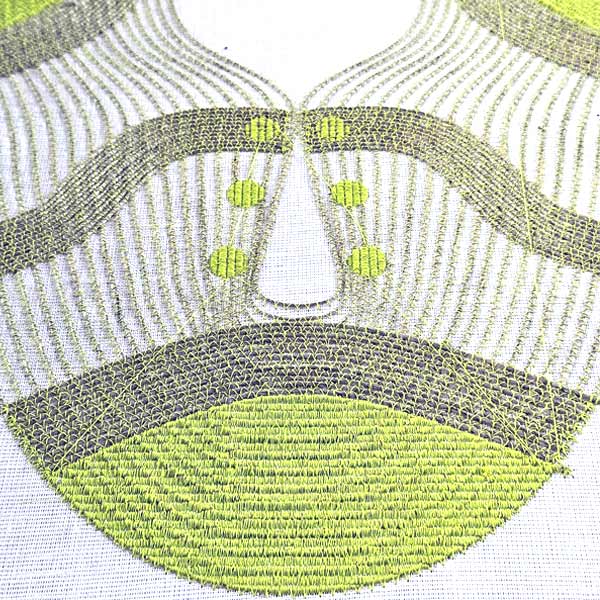
Flax fabric and flax fibre reinforced by TFP, combined with TPU-coated thread for water and abrasion resistance – in a single production step. TPU embroidery →
Research projects and initial applications have shown that flax rovings can be embroidered onto carrier materials with precision.
For demonstration purposes ZSK made an attaché case from natural flax fibre in a preform-optimised TFP process – shown in the ZSK white paper “The Dawn of the Composite Era?”. White paper (PDF) →
Which natural materials can be used?
Natural fibres are part of the standard ZSK TFP material range. Fibre, stitching thread and carrier are chosen together – and can all come from natural or bio-based sources.
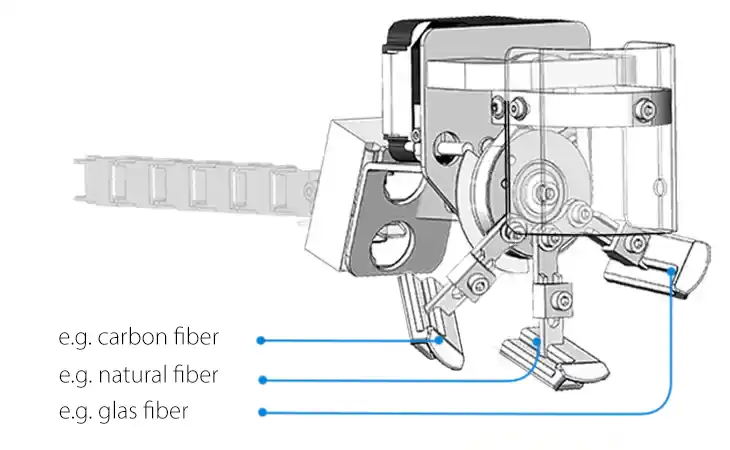
- Rovings: flax, hemp and linen; natural fibres and biomaterials are listed for the W-head
- Stitching thread: cotton is biodegradable and gets stronger when wet
- Carrier: natural materials and leather, as well as technical fabrics, nonwovens and films
- Hybrids: natural fibre combined with carbon or glass in one preform where needed
How is a natural fibre preform made?
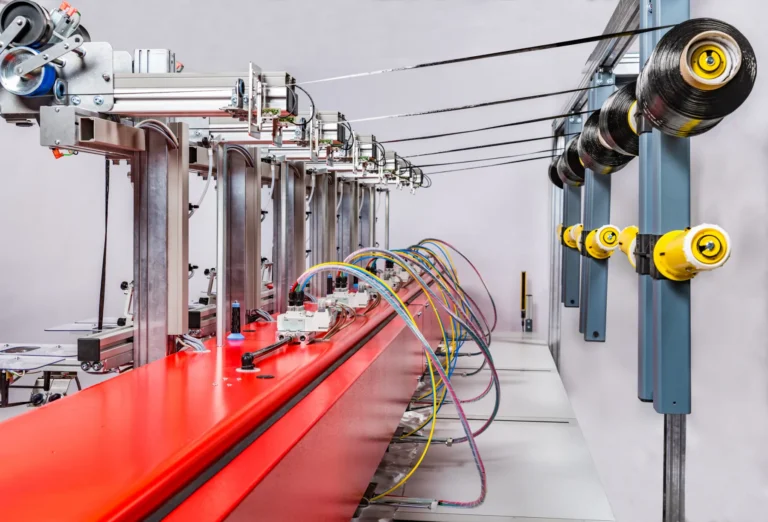
The same digital TFP process chain as for carbon – only the roving and its stitch parameters change.
- 01 DESIGN
Part geometry and load case in CAD
- 02 FIBRE PATHS
Load-optimised paths, e.g. with CarbonPath
- 03 PARAMETERS
Swing foot, stroke and stitch distance set for the natural roving in EPCwin
- 04 TFP
W-head lays and stitches the roving on the carrier
- 05 PREFORM
Dry, near-net-shape natural fibre structure
- 06 MOULDING
Impregnation or consolidation into the part
Which ZSK machines process natural fibres?
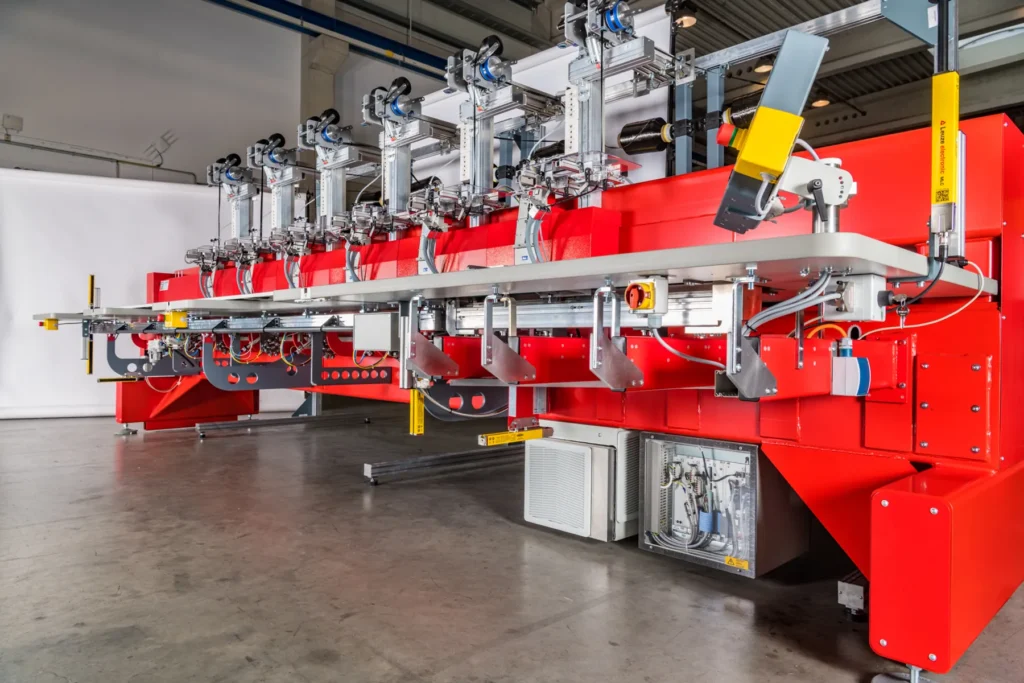
Every ZSK machine with W-head can place natural fibre rovings – from single-head lab machines to multi-head series systems.
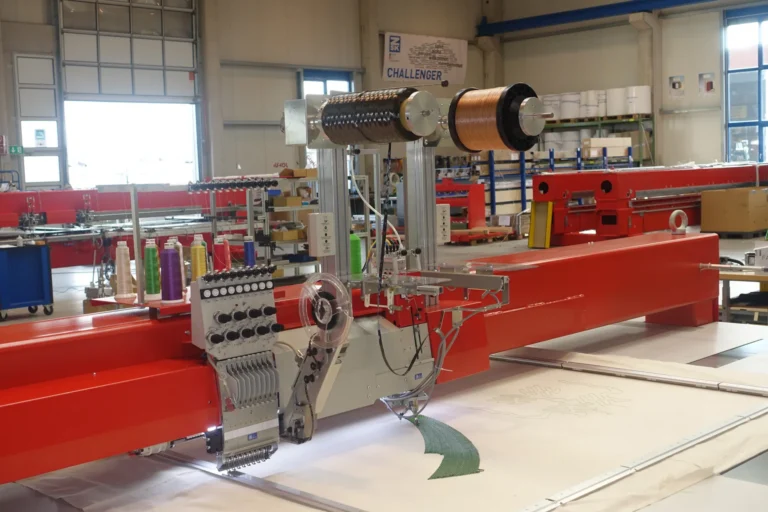
Single-head and combination machines such as the JCW 0100 used for the flax shoe upper, or W- plus F-head machines.
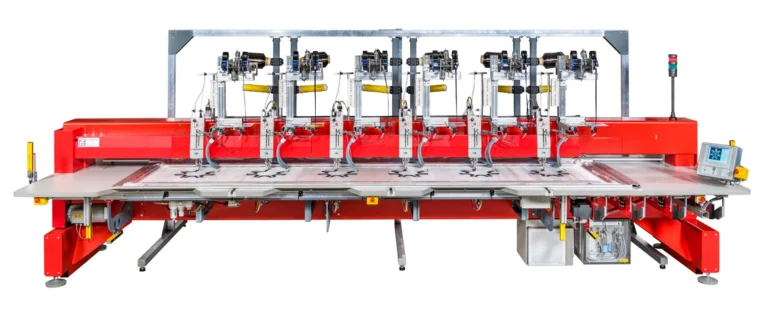
Six W-heads for small and medium parts in series, e.g. for sports and automotive.
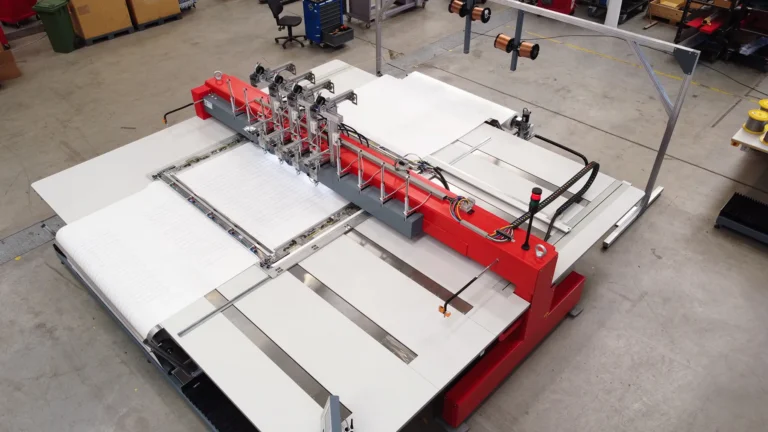
Up to 20 heads for small parts; with automatic head selection laying fields up to 7,200 × 3,000 mm.
More on fibres and composites
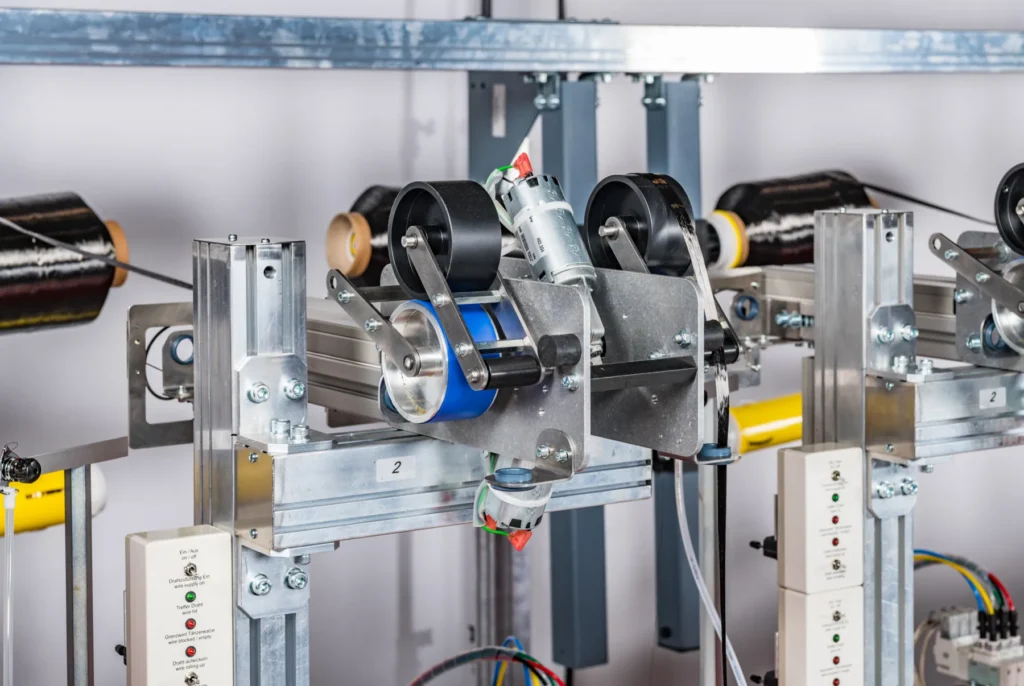
Your roving. Our W-head. Your preform.
Send us your natural fibre roving and your part – we test the stitch parameters, make sample preforms with you and assess the route to series production.
Questions about natural fibre composites
Short answers for composite engineers and sustainability teams. Missing your question? Our TFP engineers answer personally.
Can natural fibres such as flax, hemp or linen be processed with TFP?
Yes. Natural fibres are part of the ZSK TFP material range alongside carbon, glass, aramid and basalt, and they run on the same W-head. Flax is the best documented: research projects and first applications have embroidered flax rovings precisely onto carriers, and a flax shoe upper was produced on a ZSK JCW 0100. Hemp and linen rovings are tested the same way.
Can flax replace carbon fibre?
In certain use cases, yes – flax is described as a potential alternative to carbon fibre where its properties meet the requirements of the part. Whether it fits depends on the load case and the matrix. Because TFP can combine fibre types in one preform, natural fibre can also be used where it suffices and carbon only where it is needed.
Do I need a special machine for natural fibre preforms?
No. Any ZSK machine with W-head can place natural fibre rovings – the same head that lays carbon, glass or basalt. Swing foot, pantograph stroke and stitch distance are adapted to the roving in the embroidery programme. ZSK builds TFP machines from single-head lab machines up to systems with 20 heads.
Why is TFP a sustainable process?
TFP places continuous rovings near-net-shape and only where the load runs, instead of cutting plies from fabric. According to the CARL magazine 04/2026, material waste can be reduced to around three per cent, compared with significantly higher levels in conventional processes. Natural fibres add a bio-based reinforcement option.
Can natural fibre TFP be combined with TPU embroidery?
Yes. ZSK machines enable one-shot production that combines TFP with embroidery in TPU-coated thread. In the shoe upper sample, flax fabric and flax fibre were reinforced with TFP and embroidered with TPU thread, which is then heat-pressed for water and abrasion resistance – customised material behaviour in one production step.
How can I test my natural fibre on a ZSK machine?
Send ZSK your roving, carrier and part or load case. The technical embroidery team checks feasibility, sets up stitch parameters, makes sample preforms with you and shows the route to series production. ZSK supports TFP projects with knowledge exchange, training, prototyping and production support.
Technical data: material options for natural fibre TFP
| Element | Options |
|---|---|
| Reinforcing roving | Natural fibres (flax, hemp, linen), biomaterials; combinable with carbon, glass, aramid, basalt |
| Stitching thread | e.g. cotton (biodegradable), polyester, thermoplastic threads |
| Carrier / base material | natural materials and leather, technical fabrics, nonwovens, films |
| Embroidery head | W-head, up to 850 rpm, up to 4 strands per head |
| Thickness within one preform | up to 7 mm |
| Laying field | 600 × 400 mm up to 3,000 × 2,100 mm; up to 7,200 × 3,000 mm with head selection |
Sources: ZSK white papers 2018/2020, TFP brochure, knowledge base 05/2026, CARL 04/2026. Suitability of a natural fibre for a part must be tested. Subject to change.