


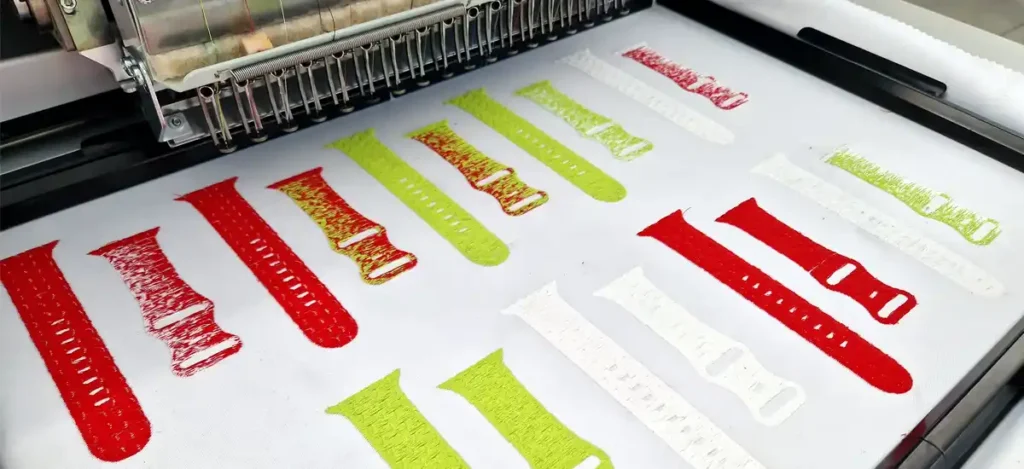
TPU embroidery: heat-pressed thread for waterproof, abrasion-resistant surfaces
TPU-coated threads run on ZSK embroidery machines just like standard yarn. A heat press then melts the coating into a sealed, rubberised surface – glossy, matte, peach-skin or laminated. Design and function in one process.
What is TPU embroidery?
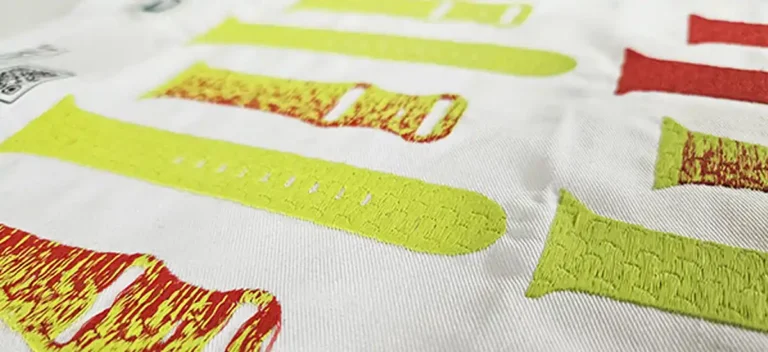
TPU embroidery uses threads coated with thermoplastic polyurethane (TPU). Stitching works like standard embroidery and fits into existing workflows; the transformation happens afterwards in a heat press. Depending on pressure and temperature, the coating melts into a sealed surface that is abrasion-resistant, water- and moisture-proof and more dimensionally stable, yet stays flexible.
How does TPU embroidery work?
Two steps: embroider as usual, then press. Pressure and temperature decide the finish.
- 01 DIGITIZE
Design created as usual, e.g. in BasePac or EPCwin
- 02 EMBROIDER
TPU-coated thread stitched like standard yarn
- 03 HEAT PRESS
Targeted pressure and temperature melt the coating
- 04 FINISH
Glossy, matte, peach-skin or heavy-duty laminate
What does TPU embroidery add to a product?
Far more than a visual upgrade – tangible performance in the areas that wear out first.
Higher durability in highly stressed product areas – longer life for the textile.
Effective protection against moisture and wetness for demanding applications.
After pressing, the embroidery becomes more rigid and holds its shape under stress.
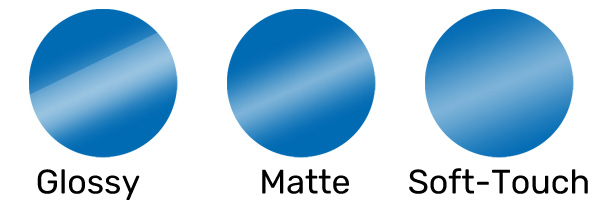
One thread, many surfaces.
Precise control of pressure and temperature turns the stitched thread into very different surfaces – from high-gloss to matte, from a pleasant peach-skin feel to a robust laminated finish. The result is always a durable, rubberised surface that works visually and technically.
What is TPU embroidery used for?
Wherever a textile has to look good and withstand abrasion, water and daily use.
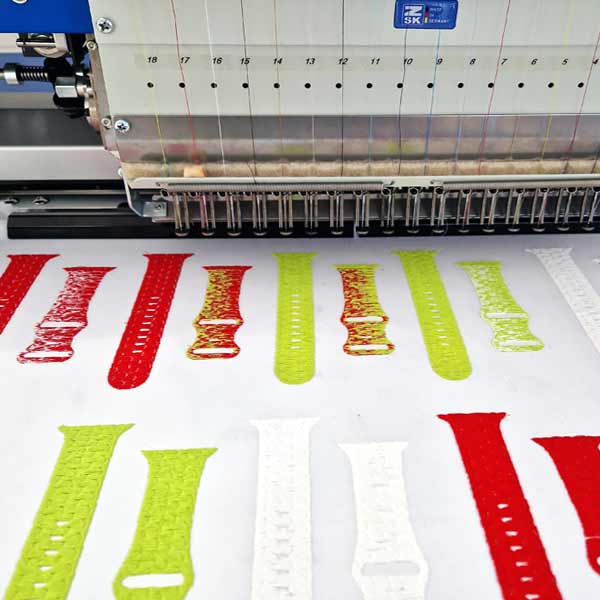
Complex, detailed designs with durability and a pleasant feel in daily use.
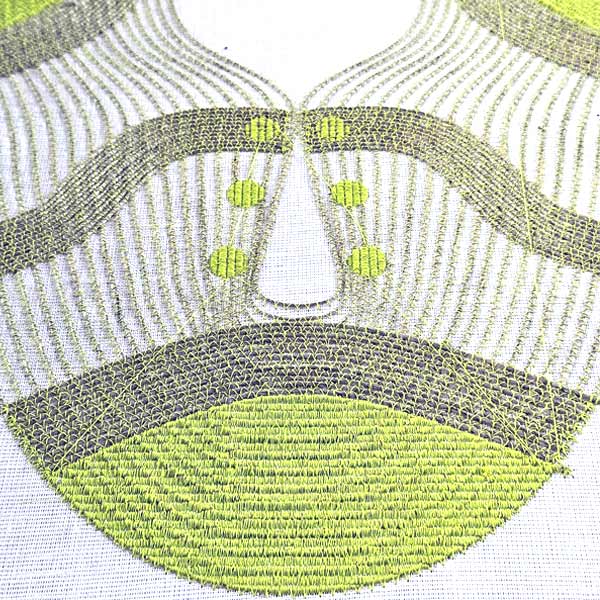
Flax reinforcement by TFP plus TPU thread for waterproofing and abrasion protection – sample made on a ZSK JCW 0100.
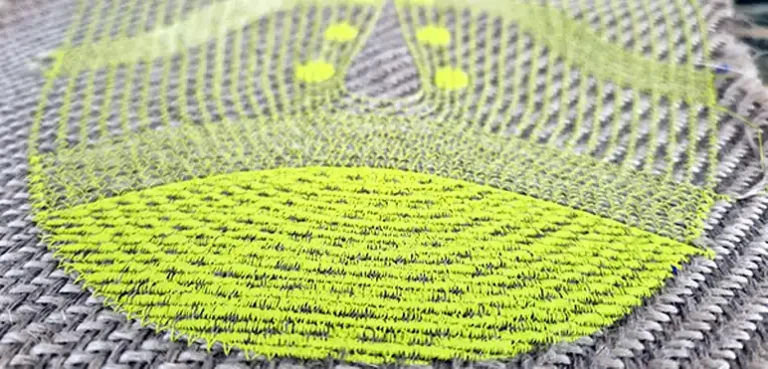
Waterproof outdoor textiles and technical protective clothing with reinforced, sealed zones.
Reinforcement and surface in a single pass.
ZSK machines enable one-shot production by combining Tailored Fibre Placement with TPU embroidery. TFP places reinforcing fibres – for example flax – in the critical zones, and the TPU thread adds waterproofing and abrasion protection in the same process. You get full control over material behaviour without a separate coating stage.
- Fibre reinforcement exactly where the product is loaded
- Sealed, rubberised surface after heat pressing
- Customised material behaviour in one production step
Which ZSK machines can embroider TPU thread?
TPU-coated threads are processed on ZSK embroidery machines just like standard yarn – from single-head to multi-head. For the combination with TFP you need a machine with W-head.
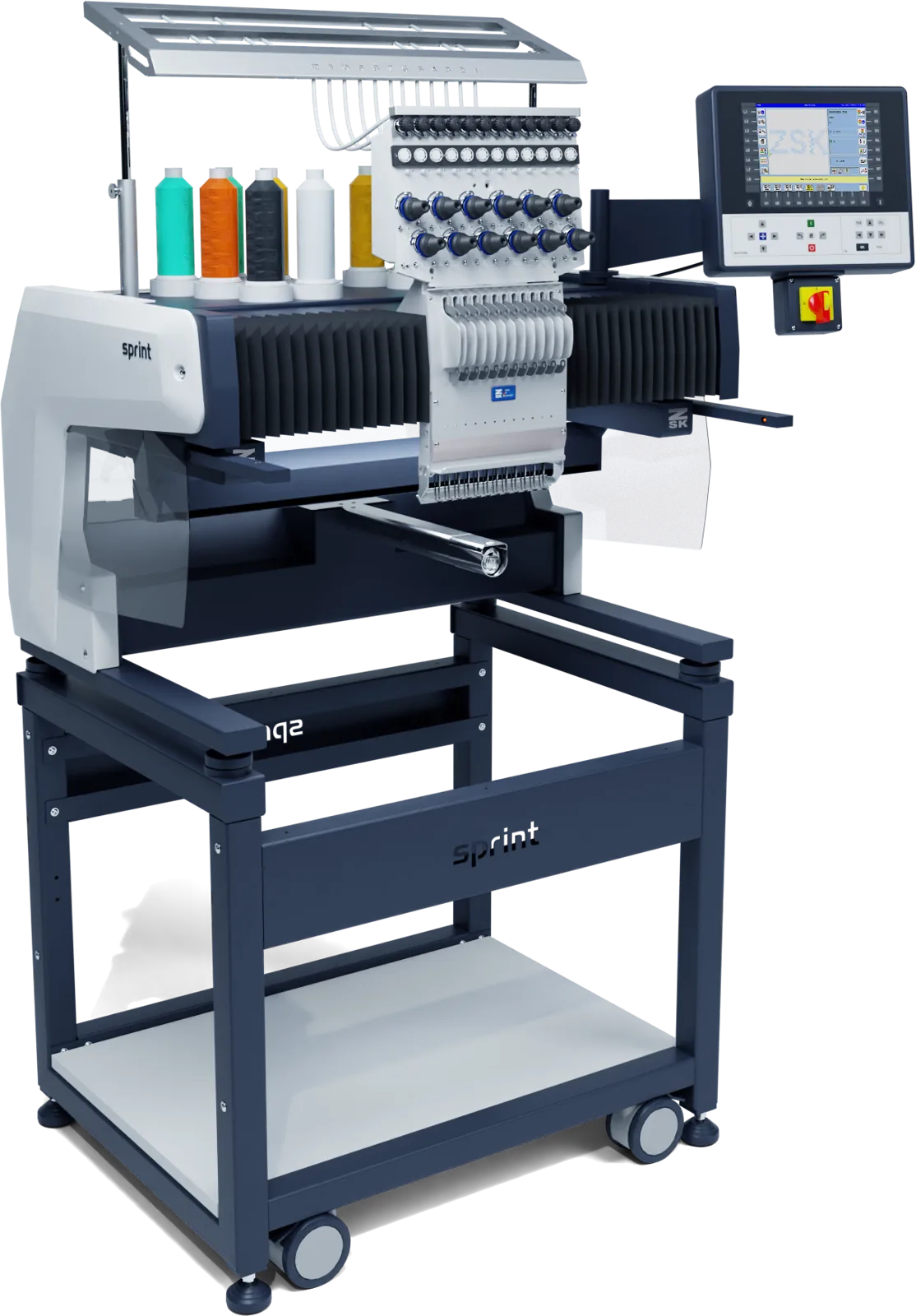
Samples, small batches and personalisation. SPRINT series →
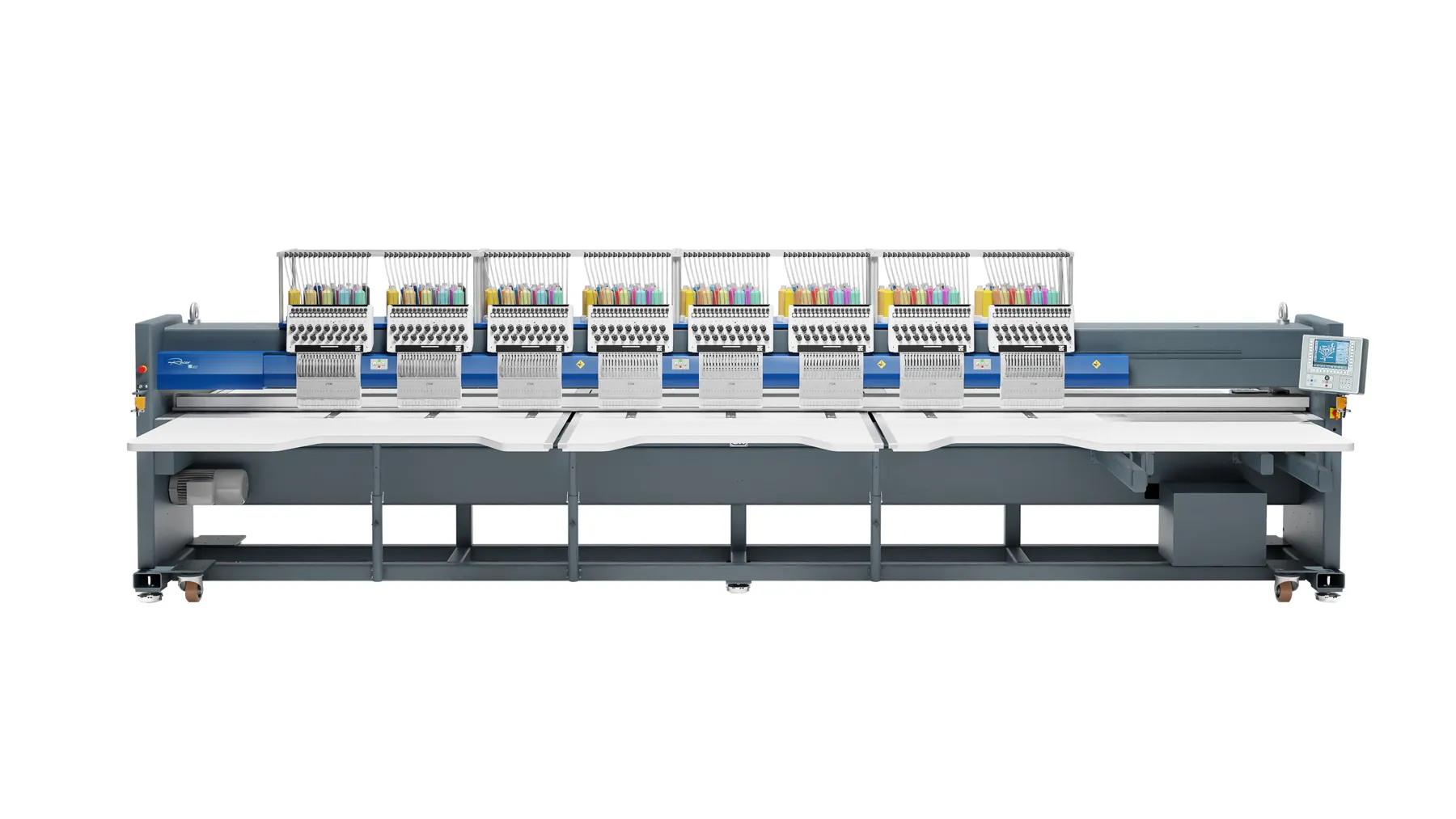
Series production of watch straps, patches and panels. RACER series →
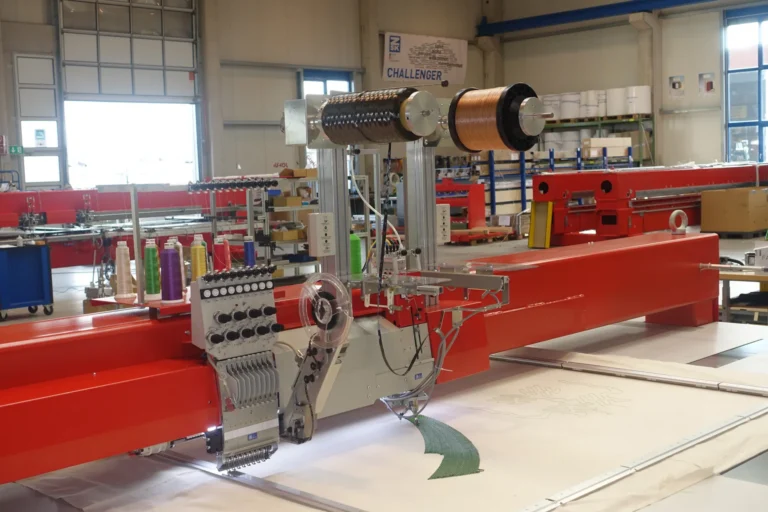
TFP and TPU embroidery combined, e.g. on a JCW 0100 or W- plus F-head machines. All systems →
More on functional embroidery
Make your embroidery last.
Send us your product idea or material – we embroider and press samples with you and find the right finish and machine.
Questions about TPU embroidery
Short answers for embroiderers and product developers. Missing your question? Our experts answer personally.
What is TPU embroidery?
TPU embroidery is embroidery with threads coated in thermoplastic polyurethane. The thread is stitched like standard yarn; afterwards a heat press melts the coating into a sealed, rubberised surface. Depending on pressure and temperature the finish is high-gloss, matte, peach-skin or a heavy-duty laminate, and the embroidery becomes abrasion- and water-resistant.
Do I need a special machine for TPU-coated thread?
No. TPU-coated threads can be processed on ZSK embroidery machines just like standard yarn, and the stitching integrates into existing workflows. The functional effect is created in the second step with a heat press. Only for the combination with Tailored Fibre Placement do you need a ZSK machine with W-head.
Which properties does TPU embroidery give a textile?
After heat pressing, TPU embroidery provides abrasion resistance for high-wear areas, water and moisture resistance, and structural stability, because the embroidery becomes more rigid. At the same time it stays flexible. This can make a separate coating stage unnecessary.
Which products are made with TPU embroidery?
Typical applications are watch straps, shoe uppers, waterproof outdoor textiles and technical protective clothing. A shoe upper sample made on a ZSK JCW 0100 combined flax fabric and flax fibre reinforcement with TPU thread for waterproofing and abrasion resistance.
How do TPU embroidery and TFP work together?
On ZSK machines, Tailored Fibre Placement and TPU embroidery can be combined for one-shot production: TFP lays reinforcing fibres along the load path, the TPU thread adds a sealed, protective surface. Reinforcement and surface finishing are achieved in a single pass, with full control over the material behaviour.
Which finish can I achieve?
The finish depends on the pressure and temperature of the heat press: high-gloss, matte, a pleasant peach-skin texture or a robust laminated surface. ZSK recommends testing the finish with your thread, fabric and press on samples before production.
Technical data: TPU embroidery process
| Step / property | Details |
|---|---|
| Thread | TPU-coated (thermoplastic polyurethane) embroidery thread |
| Stitching | like standard yarn on ZSK embroidery machines |
| Activation | heat press; pressure and temperature define the finish |
| Finishes | high-gloss, matte, peach-skin, heavy-duty laminate |
| Functional properties | abrasion resistance, water/moisture resistance, dimensional stability, flexible |
| Combination | with Tailored Fibre Placement (W-head) for one-shot production |
Sources: ZSK knowledge base 05/2026, CARL magazine 03/2025 and 04/2026. Press parameters depend on thread and fabric. Subject to change.