

Single-head vs. multi-head embroidery machines: which fits your production?
One head for flexibility, many heads for volume – and how ZSK SPRINT, RACER and CHALLENGER fit into your order mix.
Single-head or multi-head – what is the difference?
A single-head embroidery machine has one embroidery head and produces one piece at a time; a multi-head machine has several identical heads on one frame that embroider the same design simultaneously. Single-heads give maximum flexibility for one-offs and personalisation, multi-heads multiply output per operator for repeat orders.
What is a single-head embroidery machine?
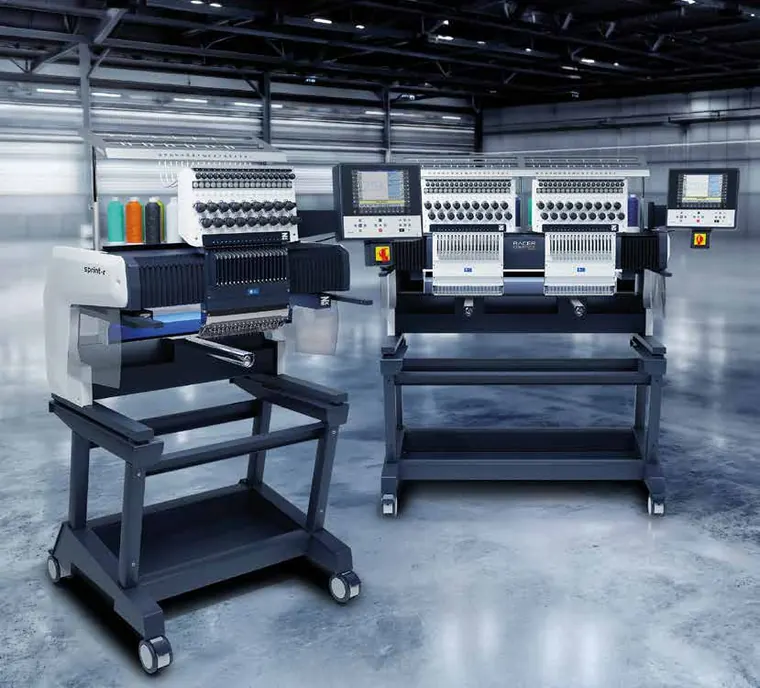
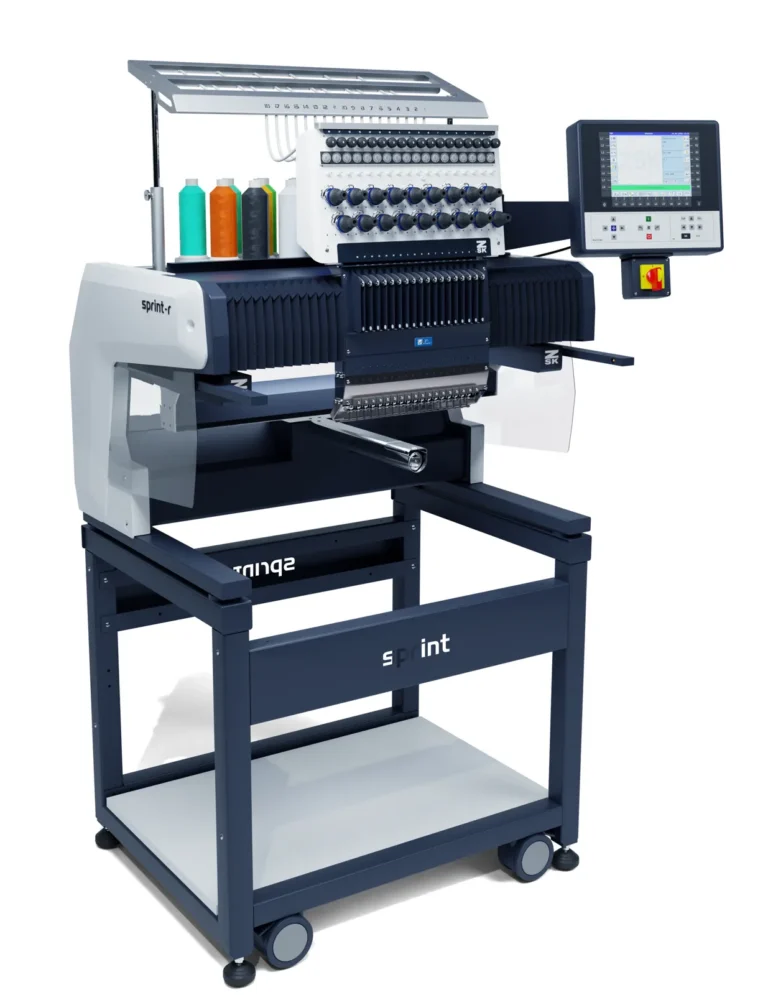
A single-head machine has one head and one pantograph. Every design change, every name and every special colour affects only that one piece, so the machine is ideal for personalisation, samples and small series. The current ZSK SPRINT range – SPRINT R9 (also written SPRINT 9R), SPRINT 9, SPRINT 9 MAX, SPRINT 8, SPRINT NX, SPRINT 7 MAX, SPRINT 7L / 7L MAX and SPRINT 7XL – switches between tubular, cap and border frame operation. The current models at a glance are shown below.
All SPRINT models listed in the catalog embroider caps in a 360 × 90 mm field. Single-head RACER models (RACER 1W, 1WL, 1XL, 0124) extend the concept to deeper fields of up to 1,000 × 700 mm.
Needles: 18
Border frame field: 500 × 360 mm
Max. speed: 1,700 rpm
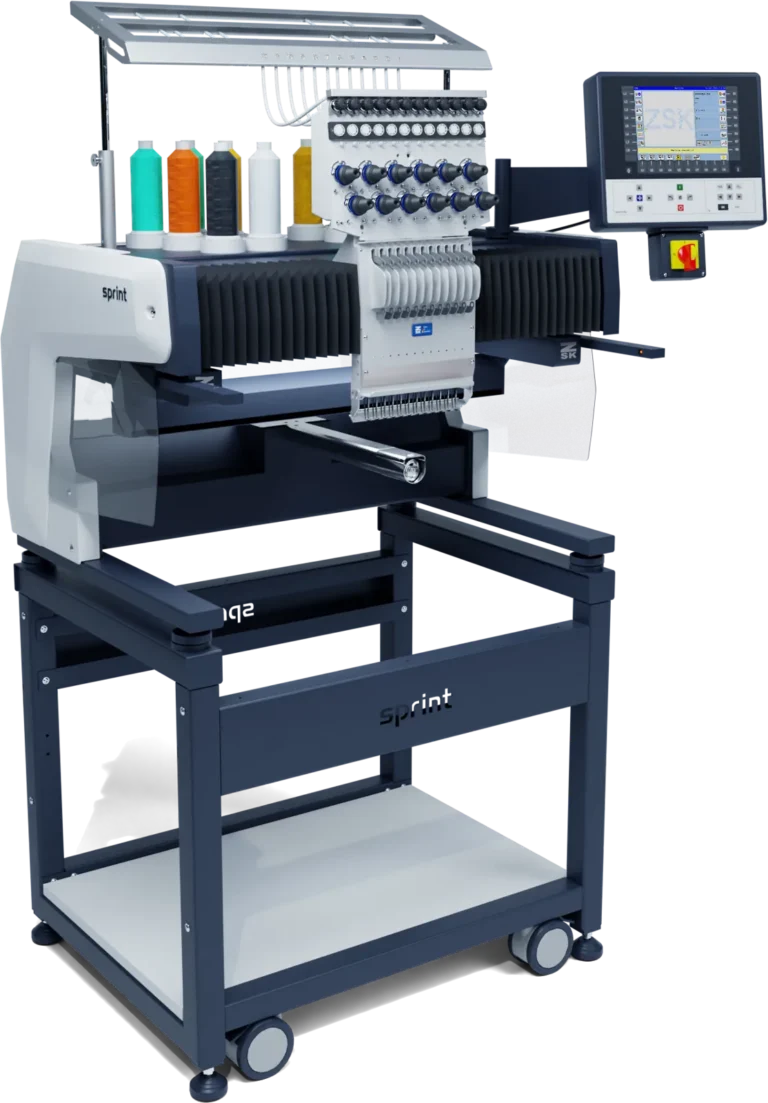
Needles: 18
Border frame field: 500 × 360 mm
Max. speed: 1,400 rpm
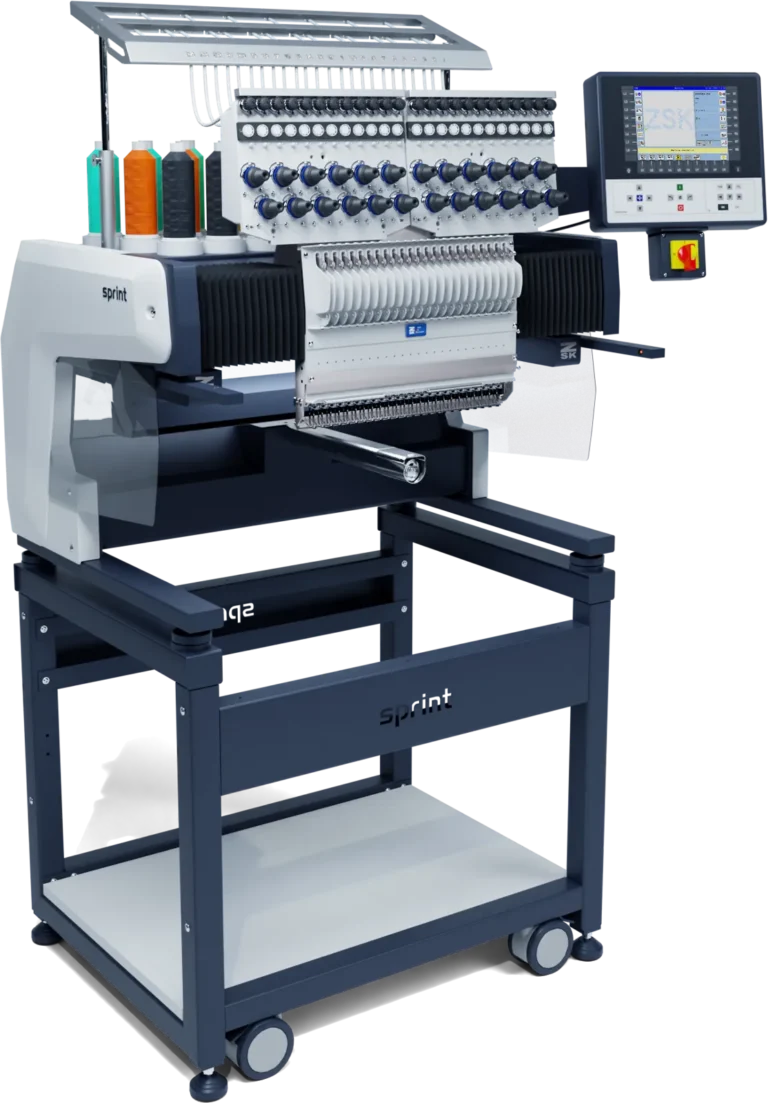
Needles: 24
Series: SPRINT 9
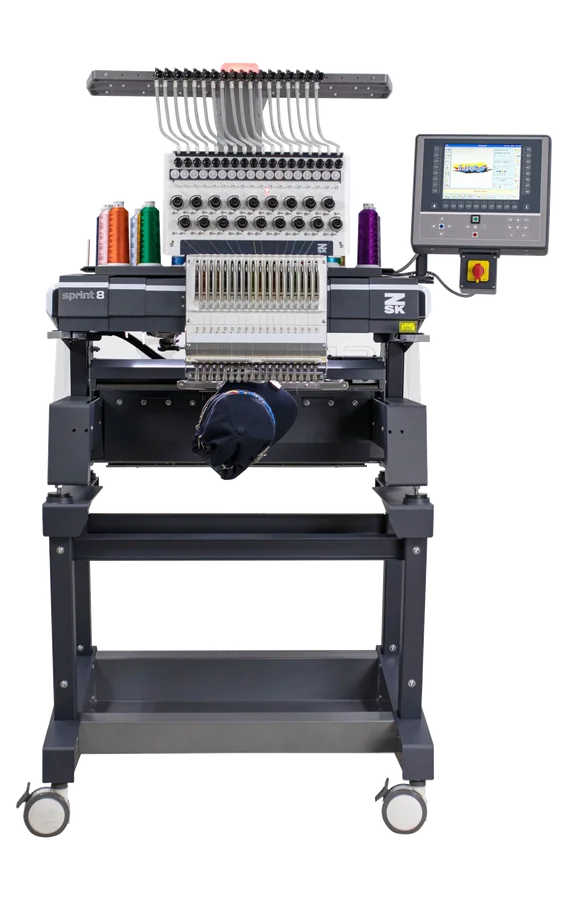
Needles: 18
Border frame field: 460 × 310 mm
Max. speed: 1,200 rpm
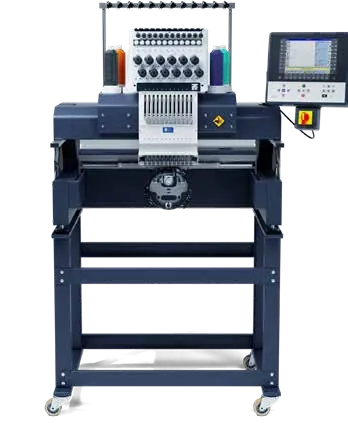
Needles: 12
Border frame field: 460 × 310 mm
Max. speed: 1,200 rpm
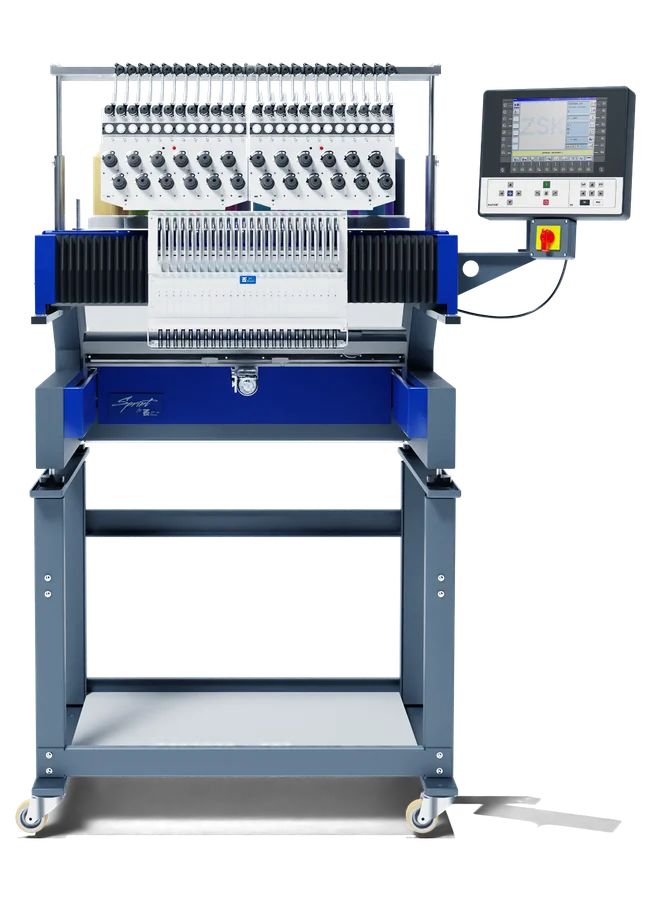
Needles: 24
Border frame field: 460 × 310 mm
Max. speed: 1,200 rpm
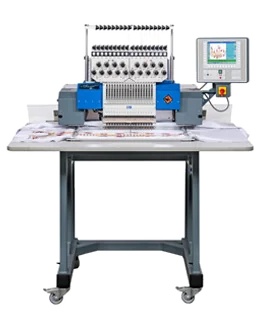
Needles: 18 / 24
Border frame field: 600 × 400 mm
Max. speed: 1,200 rpm
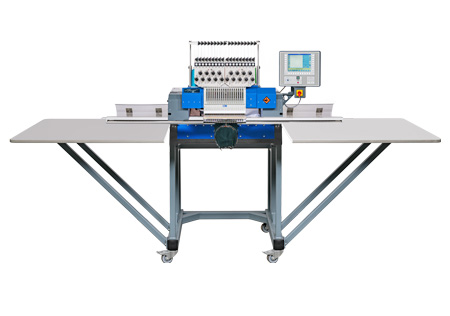
Needles: 18
Border frame field: 1,400 × 400 mm
Max. speed: 1,000 rpm
What is a multi-head embroidery machine?
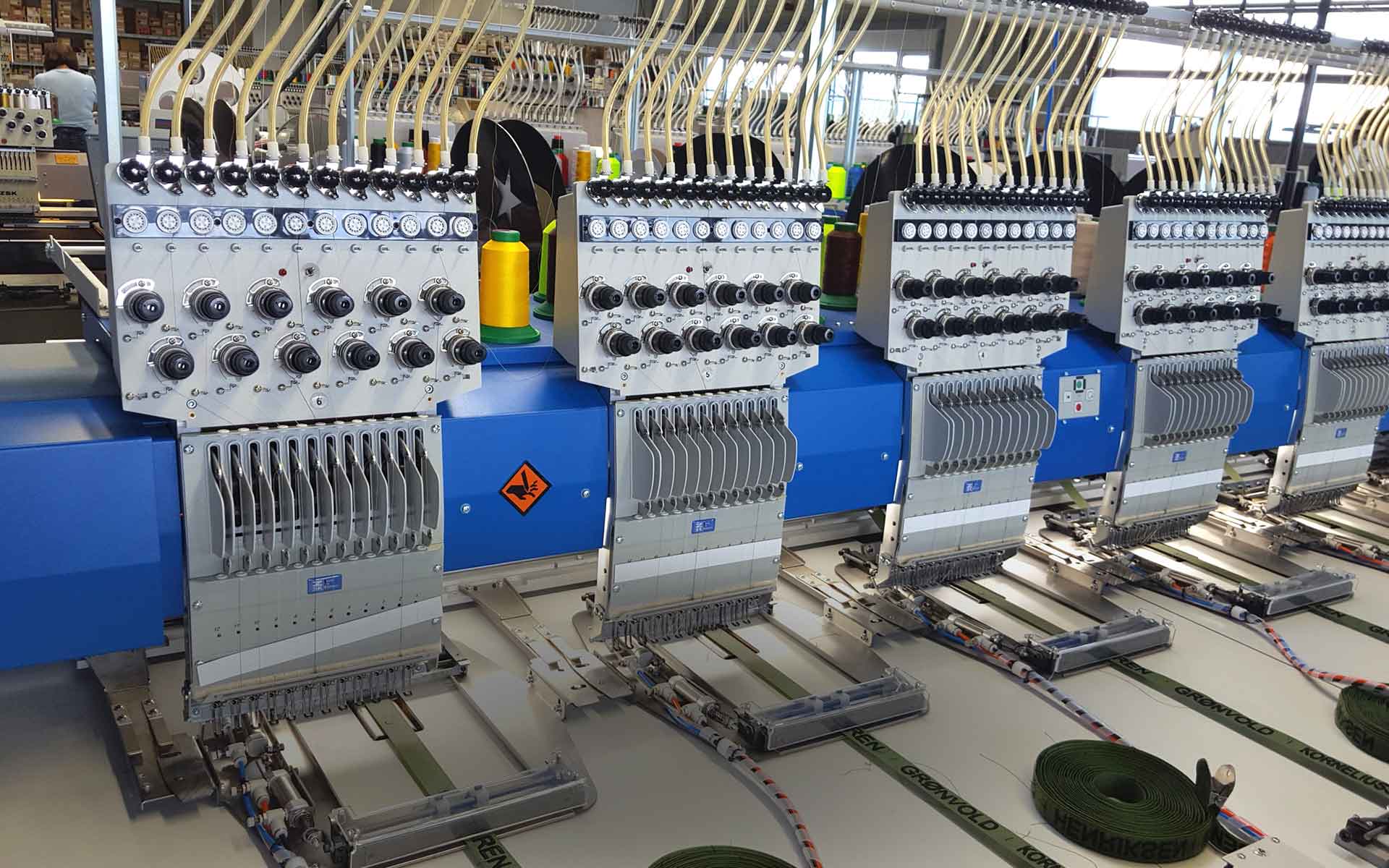
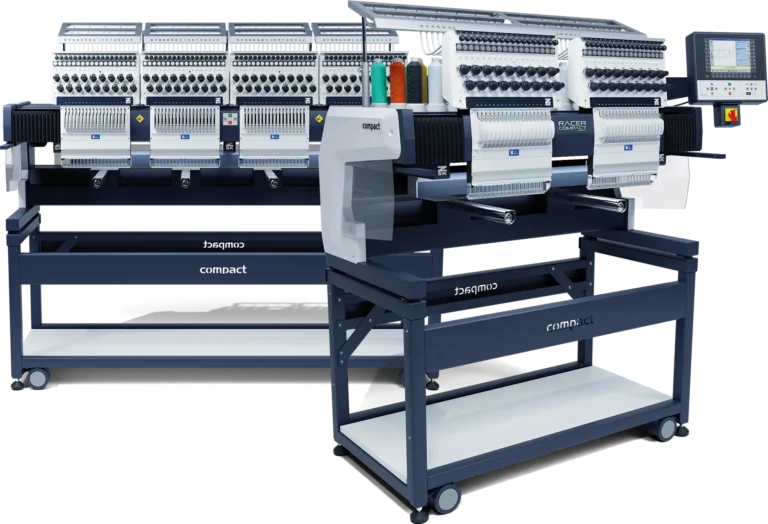
A multi-head machine drives several heads with one pantograph: every head embroiders the same design on its own garment. ZSK builds tubular multi-heads from 1 to 12 heads (RACER series) and flatbed machines from 1 to 56 heads (Flat Series and CHALLENGER). RACER machines come with standard 400 mm or wide 495 mm head spacing and field depths of 500 or 700 mm; the RACER II models carry 18 needles per head, the RACER COMPACT saves floor space. Flatbed machines are configured with head distances from 24/4 inch up to 2,100 mm and field depths up to 3,000 mm.
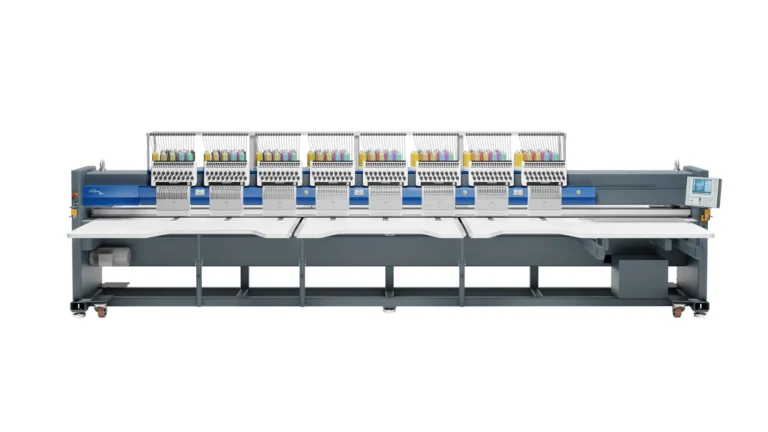
Does a multi-head machine still allow personalisation?
Yes, through head selection. Individual heads can be switched on or off during embroidery; the switch-off can be stored in the design and happens without stopping the machine. A typical use is name patches: the logo runs on all heads at once, then each head embroiders a different name from a list loaded in BasePac Quicktext. ZSK RACER machines have automatic head selection as standard.
How many machines can one operator run?
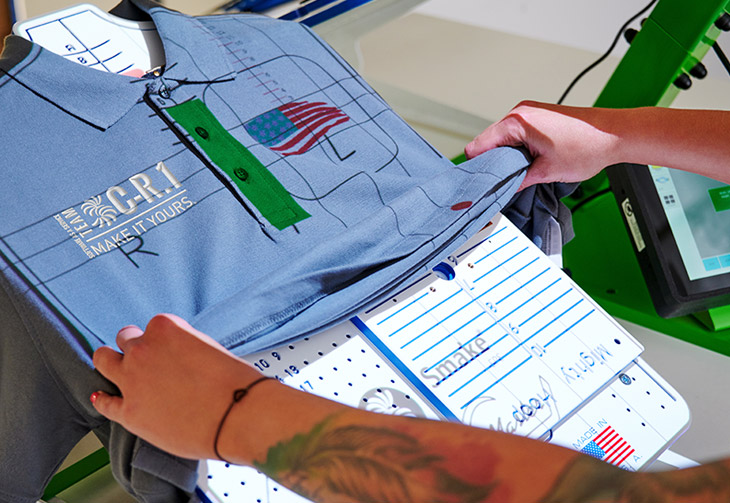
ZSK recommends groups of 5 (possibly 6) single-head machines per operator, and U-shaped groups of 3 multi-head machines per operator. Hooping is done at a separate station; ready-hooped items are brought to the machine group with the production information. That keeps operators focused on one task – hooping, machine operation or quality control.
What about floor space and transport?
A SPRINT 9 measures 1,231 × 996 × 984 mm (W × D × H); a RACER 4S needs up to 2,580 mm in length and a RACER 12S up to 6,015 mm. RACER WL machines can be further dismantled in an emergency so they fit through door openings of at least 715 mm.
When does it matter for your production?
Count your orders, not your machines. If most jobs are one to a few pieces with different names, sizes or colours, several single-heads (5–6 per operator) keep you flexible and every machine can run a different job. If you regularly produce dozens or hundreds of identical logos – workwear, club and team orders – a multi-head machine multiplies output per operator and per square metre. Many shops combine both: multi-heads for volume, single-heads for samples, rush jobs and personalisation.
Related ZSK machines, devices and software
Continue reading
Questions about single- and multi-head machines
Which concept suits your order mix? These answers give you the key data.
Is a single-head or a multi-head embroidery machine better for a start-up?
It depends on the order mix. A single-head machine such as the ZSK SPRINT handles one-offs, names and samples and switches between tubular, cap and flat embroidery. A multi-head machine pays off when the same design is ordered in larger quantities. Many businesses start with one or two single-heads and add a multi-head once repeat orders grow.
How many heads can a ZSK multi-head embroidery machine have?
ZSK RACER tubular machines are built with 1 to 12 heads, flatbed machines of the Flat Series and CHALLENGER with 1 to 56 heads. Technical embroidery machines with W-heads are available with 1 to 20 heads. Head spacing and field depth are chosen per application, for example 400 or 495 mm spacing on the RACER.
Can every head of a multi-head machine embroider a different name?
Yes. With head selection, individual heads are switched on or off during embroidery without stopping the machine; the switching can be stored in the design. For name patches, the logo is stitched on all heads at once, then each head works through its names from a list loaded in BasePac Quicktext.
How many single-head machines can one operator run?
ZSK recommends groups of five, possibly six, single-head machines per operator, provided hooping is done at a separate station and hooped items arrive with their production information. For multi-head machines ZSK recommends U-shaped groups of three machines per operator. Short walking distances keep the operator at the machines rather than at the hooping table.
Can single-head machines embroider caps?
Yes. All current SPRINT models switch between tubular, cap and border frame embroidery. The cap field is 360 × 90 mm on SPRINT and RACER machines. The premium cap drive and the cap frame with spring tension element support precise, consistent cap embroidery.
Technical data: current SPRINT single-head models
| Model | Needles | Border frame field | Max. speed |
|---|---|---|---|
| SPRINT R9 | 18 | 500 × 360 mm | 1,700 rpm |
| SPRINT 9 | 18 | 500 × 360 mm | 1,400 rpm |
| SPRINT 9 MAX | 24 | 500 × 360 mm | 1,400 rpm |
| SPRINT 8 | 18 | 460 × 310 mm | 1,200 rpm |
| SPRINT NX | 12 | 460 × 310 mm | 1,200 rpm |
| SPRINT 7 MAX | 24 | 460 × 310 mm | 1,200 rpm |
| SPRINT 7L / 7L MAX | 18 / 24 | 600 × 400 mm | 1,200 rpm |
| SPRINT 7XL | 18 | 1,400 × 400 mm | 1,000 rpm |
Values from the ZSK general catalog 06/2026 and current ZSK product information. SPRINT 9 MAX: 24 needles, otherwise identical to the SPRINT 9 (500 × 360 mm, 1,400 rpm). All listed models embroider caps in a 360 × 90 mm field.
Need an answer for your application?
Send us your designs, materials and order mix – a ZSK engineer will recommend the right head type, machine concept and options.