


Workplace and thread layout: ergonomics in embroidery production
Short walks, clear roles and the right working height: how ZSK recommends laying out machines, hooping and thread storage.
What is a good embroidery workplace layout?
Workplace and thread layout is the arrangement of machines, hooping stations and thread storage so operators spend their time on productive tasks instead of walking and searching. ZSK recommends separating hooping from machine operation, grouping 5–6 single-heads or 3 multi-heads per operator, and keeping the most common thread colours closest to hand.
How should an embroidery floor be organised?
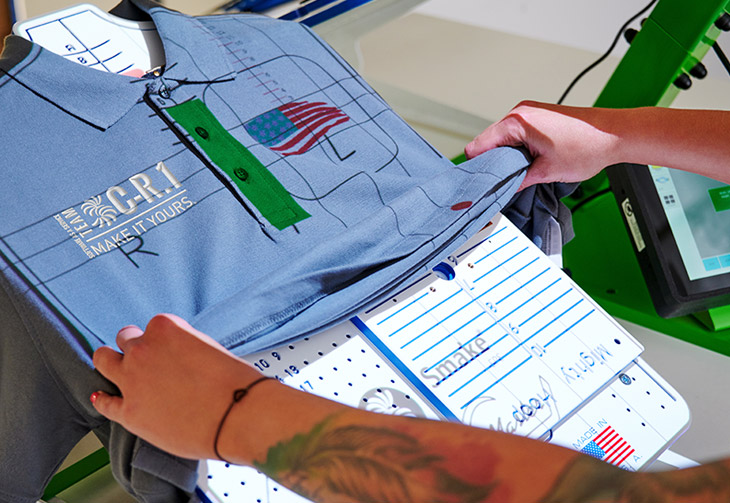
In ZSK's recommended production layout, the operator only operates machines. Hooping is handled at a different station, and ready-hooped items are brought to the machine group together with the production information. Machines are set up either for tubular work (polos, shirts) or for caps – with no change during the day. Each person focuses on one task: hooping, machine operation or quality control. New employees become productive faster because each role is narrower.
How many machines per operator?
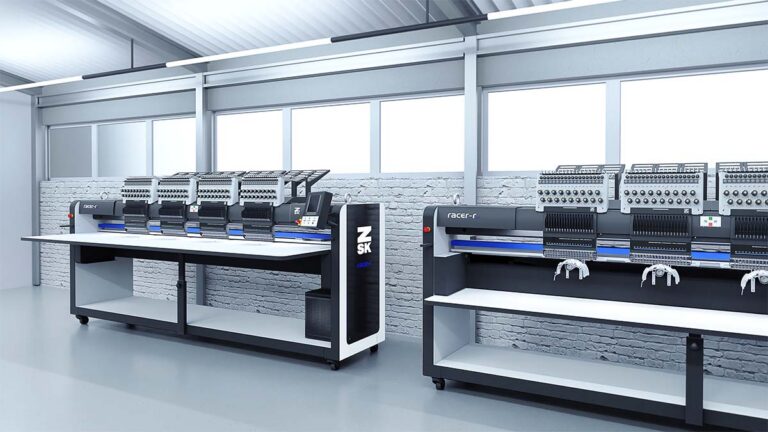
ZSK recommends groups of 5 (possibly 6) single-head machines per operator. For multi-head embroidery, U-shaped groups with 3 machines per operator keep walking distances short. Castors with two brakable wheels per tubular machine make it easy to re-arrange machine groups.
Where should the thread be stored?
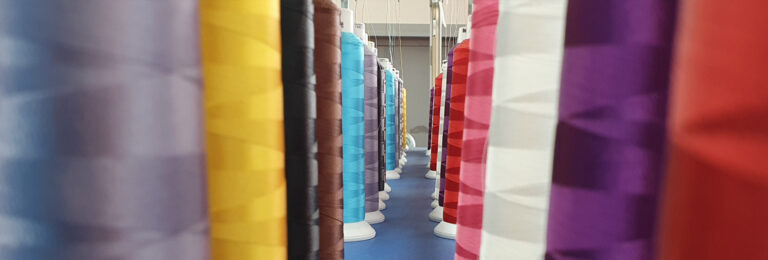
A higher number of needles reduces thread changes – ZSK offers up to 24 needles per head. To cut non-productive walking, place thread boards close to the machines. Most shops use only about 35 thread colours, which fit on one board right at the machine. A thread trolley brings cones directly to the machine during colour changes. Orders in standard colours can be offered at lower rates.
Which colours belong on the front cones?
Put the most common colours – black, white, blue, red, yellow and green – on the frontmost cones. They are changed most often and must be in the most accessible position.
Which working height is right?
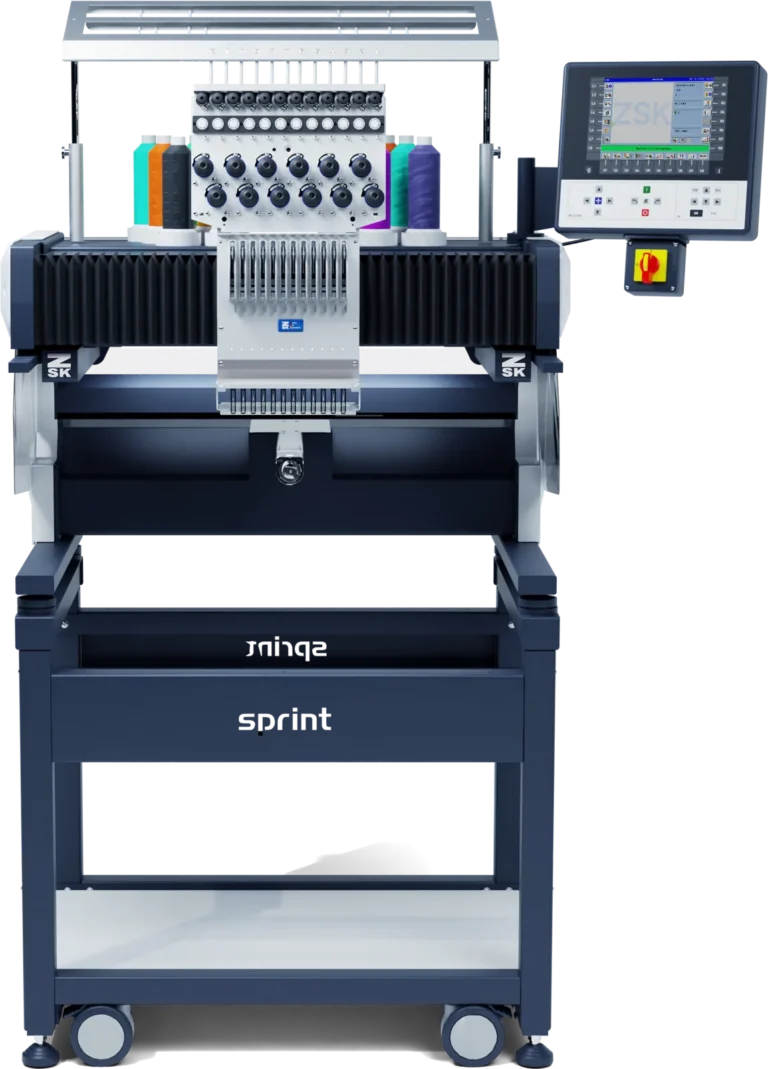
A healthy posture is especially important in a full-time job. The SPRINT base is adjustable to four heights; for RACER machines ZSK offers machine raisers of +100 mm (Art.No. 368.999.905) and +200 mm (Art.No. 368.999.904) for all models except RACER 8 WL and RACER 12S. Order raisers with the machine – later installation needs adequate lifting equipment.
For border frame operation, ZSK recommends the lowest working height. Set the SPRINT base height before placing the machine on it.
| Body height | SPRINT tubular | RACER tubular |
|---|---|---|
| 1.55–1.65 m | 950 mm | 950 mm |
| 1.65–1.75 m | 1,000 mm | 950 mm |
| 1.75–1.85 m | 1,050 mm | 1,050 mm |
| 1.85 m + | 1,100 mm | 1,150 mm |
Table plates, controls and shelves
(250 to 900 mm depending on field depth) give fast quality checks, access to thread tensions, quicker re-threading and cone changes. For heavy border frames or high speed, use a table top without cut-outs and with doors.
Swivelling and height-adjustable, single or twin mount (laptop and T8 side by side, e.g. for camera systems), optional barcode scanner holder.
(RACER) keep the next garments at the workstation.
Designs are pushed to the machine from a queue or pulled by barcode scan instead of carrying USB sticks; one PoolBox integrates up to 50 machines.
When does it matter for your production?
Layout matters most when you add machines or staff. Every extra metre between thread storage and machine, every hooping done at the machine and every operator bending over a table that is too low costs minutes per hour – and repeats across every shift. Before buying a new machine, sketch where it goes in a group, where its thread board stands and which working height your operators need.

Related ZSK machines, devices and software
Continue reading
Questions about embroidery workplace layout
Practical layout rules from the ZSK knowledge base.
How many embroidery machines can one operator run?
ZSK recommends five, possibly six, single-head machines per operator, or U-shaped groups of three multi-head machines per operator. This assumes that hooping is done at a separate station and that hooped items arrive at the machine group together with their production information.
Which thread colours should be on the front cones?
ZSK recommends equipping the frontmost cones with the most common colours: black, white, blue, red, yellow and green. Because these colours are used and changed most often, they need the most accessible position on the machine. Less frequently used colours can sit further back.
What is the right working height for an embroidery machine?
It depends on body height. For SPRINT tubular operation ZSK recommends 950 mm for 1.55–1.65 m, rising to 1,100 mm for operators over 1.85 m. For RACER the range is 950 to 1,150 mm. For border frame operation, use the lowest working height.
How many thread colours does an embroidery shop need in stock?
According to ZSK, most customers use only about 35 thread colours. These fit on a thread board placed close to the machines, which reduces walking time during colour changes. Orders in these standard colours can also be offered at lower rates.
Should hooping be done at the embroidery machine?
In ZSK's recommended production layout, no. Hooping is handled at a separate station so the machine operator only operates machines. Ready-hooped items are brought to the machine group with the production information. Tools such as the EPS HoopStation make separate hooping fast and repeatable.
Need an answer for your application?
Send us your designs, materials and order mix – a ZSK engineer will recommend the right head type, machine concept and options.