



Thread break detection and thread break behaviour on embroidery machines
A thread break costs a stop, a repair and often a visible flaw. How ZSK machines detect breaks – and how to lose less time on each one.
What is thread break detection?
Thread break detection is the monitoring of upper and bobbin thread by sensors that stop the head as soon as a thread is missing, so the machine can back-stitch and repair the gap. How the machine behaves after the stop – which heads repeat stitches, how sensitive the sensors are – decides how much time and material a break costs.
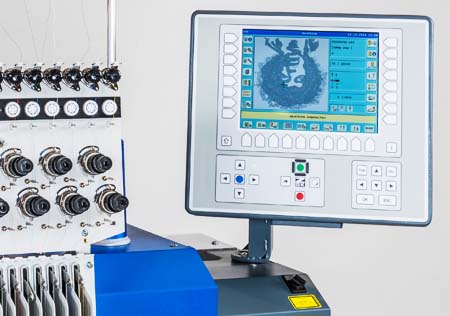
How does an embroidery machine detect a thread break?
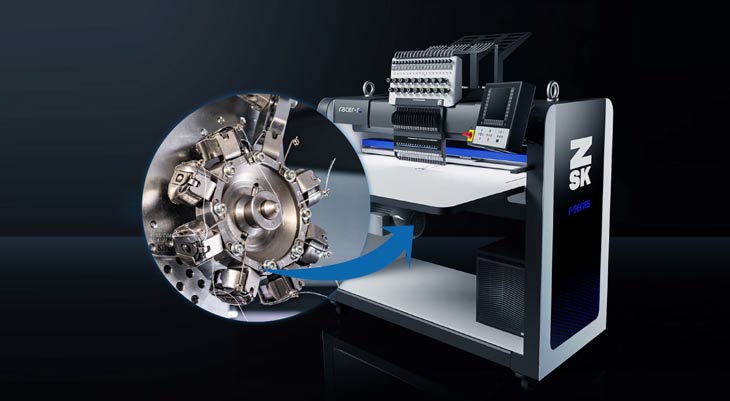
Upper thread sensors check that the upper thread keeps moving while the head stitches; bobbin (lower) thread sensors check the bobbin thread – on ZSK heads the upper thread wraps the wheel of the bobbin thread monitor before it reaches the roller tensioner. When a sensor reports a break, the head stops and the operator or the machine returns along the stitch path to close the gap. ZSK CHALLENGER machines combine upper and lower thread control with automatic back-stitching.
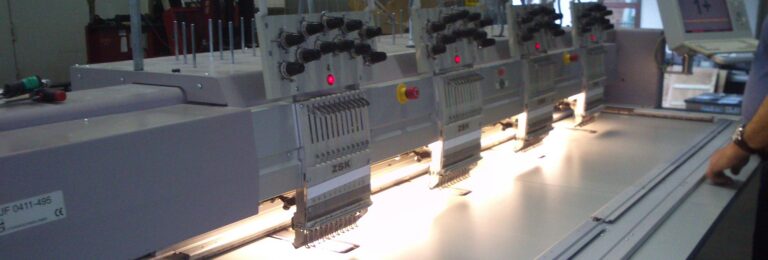
What is selective stitching on multi-head machines?
Selective stitching means that only the head that reported the thread break performs the repair stitches. The other heads re-engage according to the value set for the end of selective stitching, before the break point is reached. ZSK recommends keeping it switched on for multi-head machines. On a single-head machine it can be switched off, because you want to continue with that one head anyway.
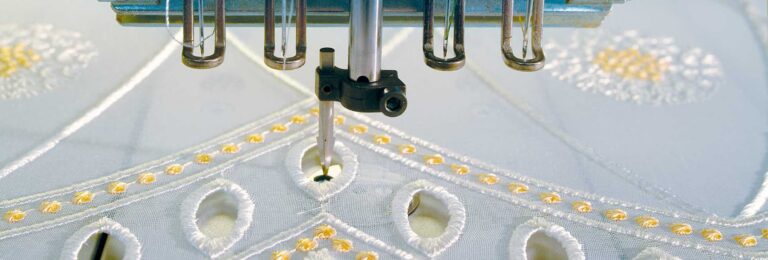
Can thread sensors be set per needle?
Yes. In the same dialog, upper and bobbin thread sensors can be enabled, disabled or set individually for each needle. One reason to deactivate a sensor: cutting blades are mounted instead of needles to cut large holes that are then stitched around – four blades per head for vertical, horizontal and two diagonal cut directions. The trimmer settings also allow the thread sensor to be disabled for a specified number of stitches after trimming.
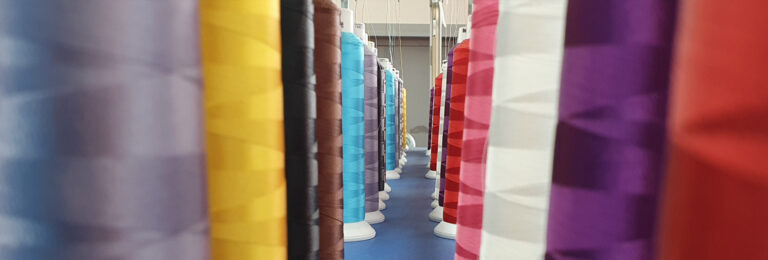
Why do metallic threads cause false thread break alarms?
Stiff, inexpensive metallic threads do not wrap properly around the spools of the bobbin thread sensors, so the spools do not rotate as they should. The result is constant false alarms. ZSK machines allow the needle-specific bobbin sensors to be set proportionally; some threads on the market require reducing the sensitivity to as low as 35 %.
How do you reduce the time lost per break?
Standard on ZSK machines and open to the rear, so the thread does not need to be threaded through the presser foot again – needle and presser foot are the points most often re-threaded after a break.
Cut-outs give quick access to the thread tensions and for re-threading.
Detects the end of thread directly at the cone, before it runs out of the head, so no new threading is needed (Art.No. 270.050.900).
Servo-driven machines save the pantograph position and continue without displacement.
How do you prevent thread breaks in the first place?
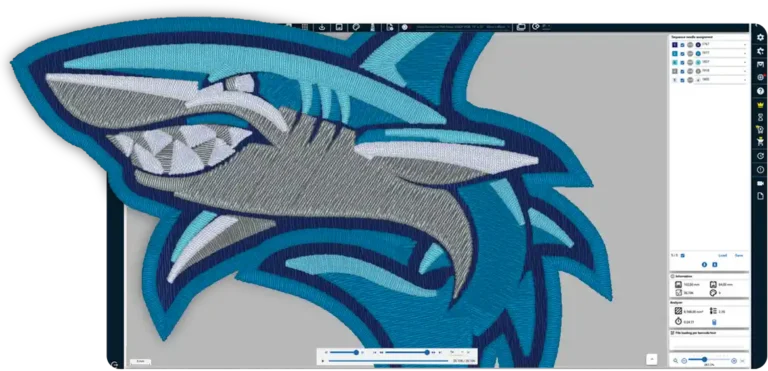
Correct tension, suitable needles and sensible stitch density are the main levers. The Analyzer in ZSK TERMINAL calculates stitch density in stitches per mm² – fewer unnecessary stitches mean fewer breaks. For 3D foam, a long-groove needle such as the DBxK5 LGR prevents thread pinching. On the R-head, individual needle thread clamps and the Intelligent Presser Foot contribute to fewer skipped stitches and thread breaks; SBOP disconnects the drive if a needle bar is blocked. MY.ZSK records thread breaks per machine, so you can see where they cluster.
When does it matter for your production?
Every thread break costs a stop, a repair and often a visible flaw. On multi-head machines the cost multiplies, which is why selective stitching and correctly tuned sensors matter most there. If your MY.ZSK data or your operators report frequent breaks on certain designs, check density first; if they cluster on metallic or special threads, adjust the needle-specific bobbin sensor sensitivity before changing anything mechanical.
Related ZSK machines, devices and software
Continue reading
Questions about thread breaks
Sensors, settings and prevention in brief.
What does selective stitching do after a thread break?
On multi-head machines, selective stitching lets only the head that reported the thread break perform the repair stitches. The other heads wait and re-engage according to the set value before the break point is reached. ZSK recommends keeping it on for multi-heads; on single-head machines it can be switched off.
Why does my machine report thread breaks with metallic thread?
Stiff metallic threads often do not wrap around the spools of the bobbin thread sensors, so the spools do not turn and the sensor reports a break that did not happen. On ZSK machines you can reduce the sensitivity of the needle-specific bobbin sensor proportionally; some threads require values as low as 35 %.
Can I switch off the thread sensor for individual needles?
Yes. ZSK machines let you enable, disable or set upper and bobbin thread sensors per needle. This is used, for example, when cutting blades replace needles to cut holes that are stitched around afterwards. After trimming, sensing can also be disabled for a defined number of stitches.
How can I reduce re-threading time after a thread break?
ZSK machines use a Fast Thread Presser Foot that is open to the rear, so the thread does not have to be threaded through the presser foot again. Table plates with cut-outs give quick access to tensions. On W-heads, thread end detection at the cone stops the machine before the thread runs out of the head.
What causes frequent thread breaks in embroidery?
Common causes are incorrect thread tension, unsuitable needles, excessive stitch density and difficult threads. Check bobbin tension (25–30 g for 150/180 thread), use a long-groove needle for 3D foam and analyse density with the ZSK TERMINAL Analyzer. MY.ZSK records thread breaks per machine to show where problems cluster.
Need an answer for your application?
Send us your designs, materials and order mix – a ZSK engineer will recommend the right head type, machine concept and options.