


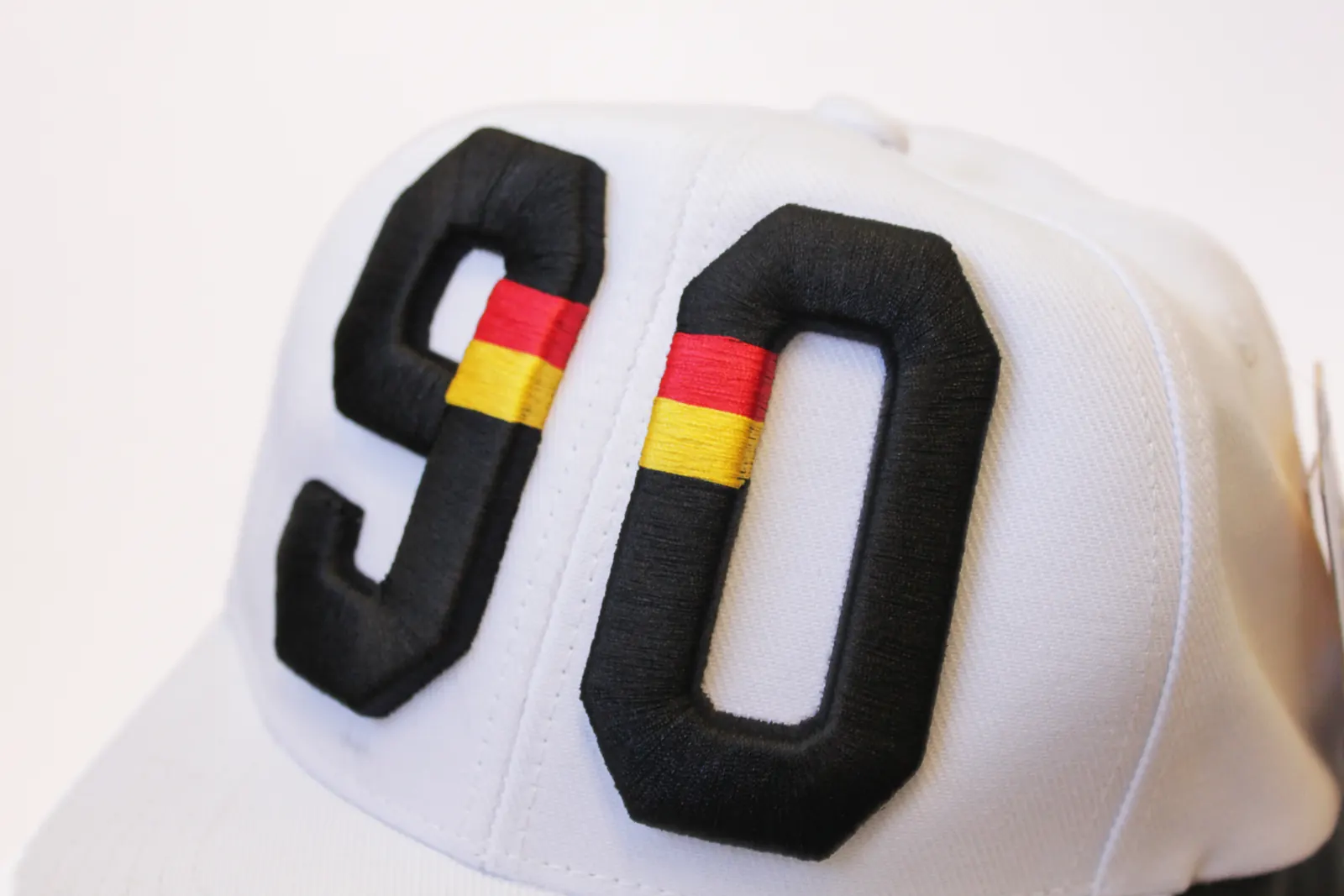
3D puff embroidery on caps: foam, digitizing and machine setup
A raised logo turns a cap into a premium product. Here is what you need for clean 3D puff: the right foam, a 3D-ready embroidery file, a fresh needle, firm cap backing and a stable cap drive.
What is 3D puff embroidery?
3D puff (or puffy) embroidery is a technique in which a sheet of foam – usually 3 mm thick – is laid on the fabric and covered with dense satin stitches. The needle perforates the foam along the edges of the satin columns, the excess foam is torn away, and the design stands up from the cap where you can see and feel it.
Which designs work in 3D puff?
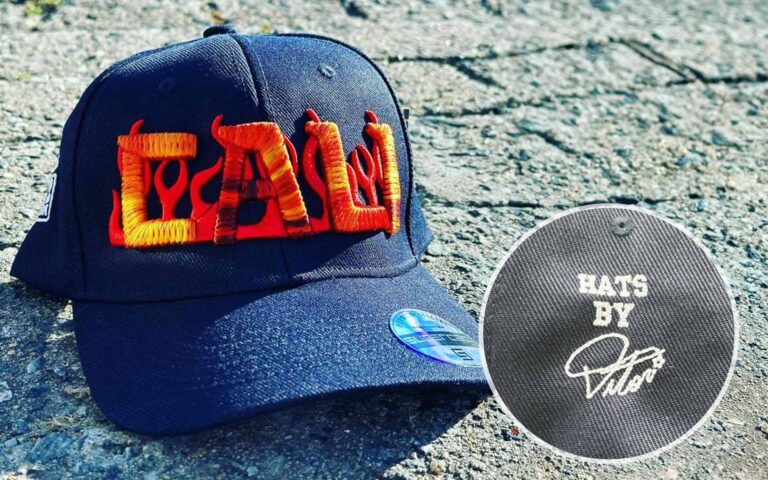
3D puff rewards bold, simple shapes. According to ZSK Campus, good candidates are large lettering and areas that can be covered with satin columns about 3 to 10 mm wide, on firm fabrics – above all structured caps.
Keep these flat instead: lines narrower than 3 mm (they cannot cover the foam), small or script lettering, fill stitches and stretchy fabrics. Satin columns much wider than about 10 mm look flat and snag more easily.
Which foam thickness and hardness do you need?
Puffy foam is offered from about 2 to 6 mm; 3 mm is the standard for caps. The ZSK knowledge base notes that puff heights of 3–4 mm run easily with the regular silk-stitch ramp, while 4–8 mm needs adapted pantograph settings (see machine setup below). Würker 3D Puffy foam is EVA, 3 mm thick, in 280 × 280 mm sheets, 10 sheets per pack.
The firm grade is compressed less by the satin stitch, keeps sharp edges and tears away cleanly. Recommended for caps, badges and bold logos. Six colours: white, black, red, blue, green, yellow.
Hard black →Hard white →All colours →The softer grade stays comfortable on sweatshirts and polo shirts and can be stacked in several layers for a stronger effect. Available in white and black.
Soft white →Soft black →Tiny foam residues always remain between stitches and along the edges. If the foam matches the thread colour, nobody sees them – white foam under red thread is a visible flaw.
Hard red →Hard blue →How do you digitize a design for 3D puff?
A normal flat embroidery file usually does not work in 3D. The foam must be perforated cleanly and fully covered. ZSK Campus gives these guide values – always confirm them with a test piece.
| Parameter | Guide value for 3D puff | Why |
|---|---|---|
| Stitch type | Satin stitch only | Fill stitches destroy the effect |
| Satin width | about 3 to 10 mm | Narrower does not cover the foam, wider looks flat |
| Density | roughly double, stitch spacing about 0.16–0.20 mm | No foam shows through |
| Underlay | none | It presses the foam down |
| Column ends | closed at 90° or 45° | Open ends let foam show |
| Stitch order | flat parts first, then 3D; in one pass, bottom to top, without overlaps | The machine stops so you can place the foam |
Sources: ZSK Campus course “3D Puff on Caps” and Campus blog. Digitize 3D files with BasePac.
Which machine settings work for 3D foam?
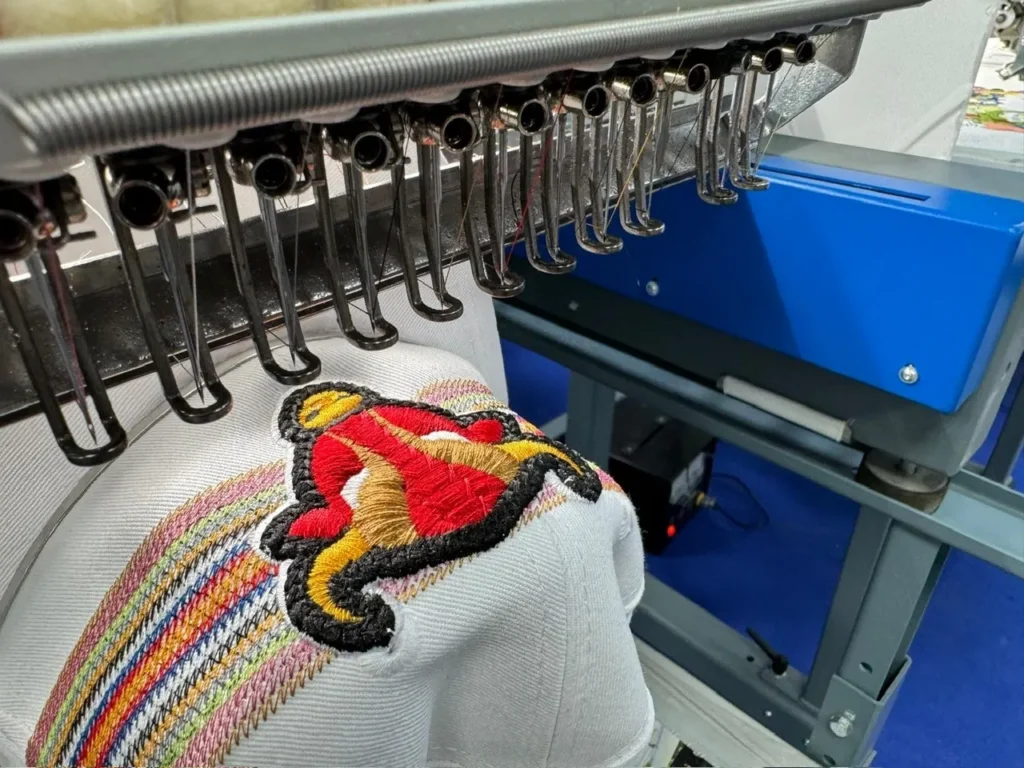
As a starting point, ZSK Campus recommends about 700 stitches per minute, raising the presser foot by the foam thickness and checking that the upper thread lies cleanly on the foam. On the R-head, the electronically driven Intelligent Presser Foot can be set to four height positions and adapts to 3D embroidery on foam (CARL 04/2026).
For higher puff (4–8 mm), the ZSK knowledge base explains that the silk-stitch ramp stops too late and the needle re-enters the material before the pantograph halts. Recommended settings there:
- Silk stitch: off
- Pantograph start (PA-Start): 280° – the needle is out of the material
- Speed: 650–700 rpm, so the pantograph stops before the needle re-enters
Which needle and backing for puffy embroidery?
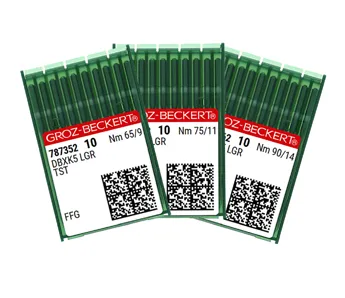
In 3D embroidery the needle penetrates deep into the foam, often up to the shank. With conventional needles the thread can be pinched, causing thread breaks and skipped stitches. The LGR has a long thread groove into the shank that protects the thread. In the shop: 65/9, 75/11, 90/14.
DBxK5 LGR 75/11 →All needles →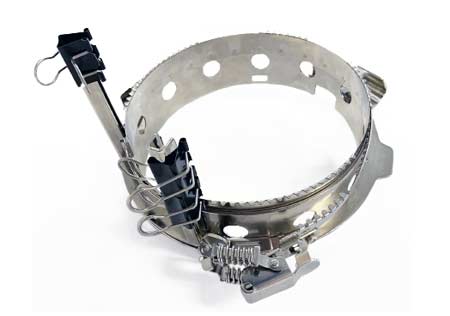
An especially stiff tear-away of 100% polyester, pre-cut to 10 × 40 cm for standard cap frames, 100 sheets per pack, white or black. It holds caps securely even on strongly curved styles. Campus alternative: two layers of tear-away Hard 80 gsm.
Cap backing →All backings →
Use polyester embroidery thread in weight 40. After stitching, tear the foam off, tidy up with tweezers and apply hot air briefly – hot air only with 100% polyester thread, because cotton and viscose burn.
Embroidery threads →Useful tools →How do you embroider a 3D puff logo on a cap?
Six steps from ZSK Campus, from design to finished cap.
- STEP 1Plan the design
Think in areas instead of lines and decide which parts become 3D.
- STEP 2Hoop cap and backing
Clamp the cap tightly in the cap frame with firm cap backing behind the front panel.
- STEP 3Stitch the flat parts
Embroider all flat elements; the machine then stops for the foam.
- STEP 4Place the foam
Lay the foam slightly larger than the design on top – do not hoop it.
- STEP 5Stitch the 3D parts
Embroider the satin columns at reduced speed and watch the first stitches.
- STEP 6Finish
Pull off the foam in one piece, remove leftovers with tweezers, apply hot air briefly.
Why the cap drive decides 3D quality
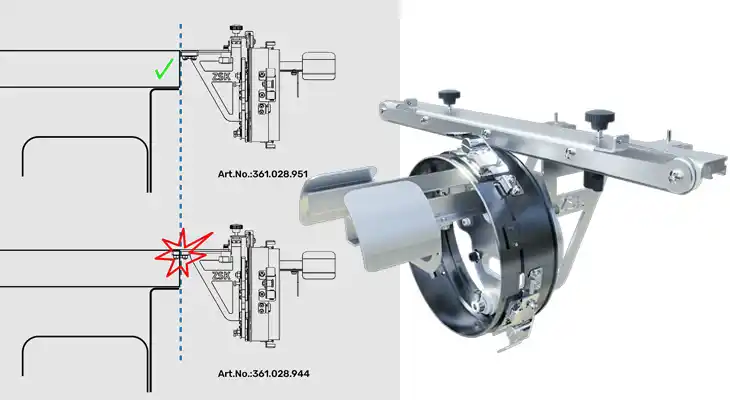
Dense satin over foam puts the cap under strain. The ZSK premium cap drive was designed for 3D embroidery: stable running, minimal vibration and precise control. It has been in series production since 2025, is standard on new ZSK machines and is available as an upgrade kit for existing SPRINT and RACER machines. The cap field is 360 × 90 mm.
The Cap Frame 360 Premium is listed for puffy embroidery: a hold-down system improves fabric tension, and the clamping ring with extra springs clamps caps of different thickness quickly. Older 360 frames can be retrofitted with the clamping ring.
Why is foam showing through – and other common 3D problems
| Problem | Typical cause | Fix |
|---|---|---|
| Foam shows through | Density too low or open column ends | About double density, close every end at 90° or 45° |
| Frayed edges | Foam too soft or needle blunt | Firmer foam (75D) and a new needle |
| Thread breaks | Too fast, tension too high, thread pinched in the foam | Slow down to about 700 stitches/min; try the DBxK5 LGR |
| Design looks flat | Satin too wide or foam too thin | Keep satin at about 3–10 mm; check foam thickness |
More on thread breaks: thread break detection and thread tension.
Everything for 3D caps in the ZSK online shop
The ZSK online shop supplies embroiderers regardless of machine brand – and there is no minimum order.
Questions about 3D puff embroidery
Short answers for the machine floor. For your design, talk to a ZSK expert.
What is 3D puff embroidery?
3D puff embroidery covers a sheet of foam, usually 3 mm thick, with dense satin stitches. The needle perforates the foam along the edges of the satin columns, the excess is torn away and the design stands up from the fabric. It works best on firm fabrics such as structured caps, with bold shapes and large lettering.
Which foam thickness is best for caps?
3 mm is the standard thickness for 3D embroidery on caps; puffy foam is generally available from about 2 to 6 mm. Firm foam gives cleaner edges. Würker 3D Puffy foam is 3 mm EVA in 280 × 280 mm sheets, in hard 75D (recommended for caps and badges) and soft 38D.
Hard or soft puffy foam – what is the difference?
Hard 75D foam is compressed less by the satin stitch, so the height stays and the edges remain sharp; it is the choice for caps, badges and bold logos. Soft 38D foam stays comfortable on lighter textiles such as sweatshirts and polo shirts and can be used in several layers for a stronger 3D effect.
Can I use a normal embroidery file for 3D puff?
Usually not. A 3D file uses satin stitches only, at about double density (stitch spacing roughly 0.16–0.20 mm), without underlay, with closed column ends at 90° or 45°, and its own stitch order: flat parts first, then the 3D parts. Fill stitches destroy the effect. Always run a test piece.
Which needle should I use for 3D puff embroidery?
ZSK Campus recommends a new DBxK5 needle in size 75 to 90. For thick foam, Groz-Beckert developed the DBxK5 LGR, available in the ZSK shop in 65/9, 75/11 and 90/14: its long thread groove reaches into the shank, so the thread is not pinched when the needle penetrates deep into the foam.
What speed should I run for puffy foam?
As a starting point, about 700 stitches per minute, with the presser foot raised by the foam thickness. For puff heights of 4–8 mm, the ZSK knowledge base recommends silk stitch off, pantograph start at 280° and 650–700 rpm, so the pantograph stops before the needle re-enters the material.
Do I need a special cap drive for 3D embroidery?
Any ZSK SPRINT or RACER with cap device can stitch 3D caps. The premium cap drive – standard on new ZSK machines since 2025 – was designed for 3D: stable running, minimal vibration and precise control for cleaner stitch formation. Existing SPRINT and RACER machines can be upgraded with a kit from the ZSK shop.
Continue reading
Technical data: Würker 3D Puffy foam
| Property | Hard | Soft |
|---|---|---|
| Material | EVA | EVA |
| Density / hardness | 75D | 38D |
| Thickness | 3 mm | 3 mm |
| Sheet size | 280 × 280 mm | 280 × 280 mm |
| Pack size | 10 sheets | 10 sheets |
| Colours | white, black, red, blue, green, yellow | white, black |
| Recommended for | caps, badges, bold logos | lighter textiles, multi-layer effects |
Want 3D caps that sell?
Tell us your caps, designs and machines – a ZSK expert will help with foam, files, cap drive and settings. Supplies ship from the ZSK online shop for every machine brand, with no minimum order.